Keeping Current Matters | May 28, 2025
A few years ago, homes were flying off the shelves and getting multiple offers well over their asking price. It felt like you could name your price and still have buyers lined up at the door.
But today’s housing market is different. Buyers are getting more selective now that inventory has grown. Homes are sitting a little longer. And more sellers are having to cut their prices.
So, how do you still come out on top? It all starts with one thing, pricing your house right from the start. Today, that matters more than ever – and it can make or break your sale.
There’s a Real Price Disconnect Between Buyers and Sellers
A recent survey from Realtor.com shows 81% of home sellers believe they’ll get their asking price or more. But the actual sales data shows there’s a growing gap between what sellers expect and what buyers are actually willing to pay.
In fact, an annual report from the National Association of Realtors (NAR) shows 44% of recently sold homes went for less than the asking price. And 1 in 3 sellers had to cut their price at least once before the home sold. It’s a sign that expectations may be a little out of step with today’s reality.
Check out the graph below. It uses data from Redfin to show that asking prices (blue line) are higher than actual sales prices (green line) by a wider and wider margin:
This tells you something important: not all buyers are willing to pay what many sellers are asking. That doesn’t mean you can’t sell for a great price – but it does mean you need to start with a price that reflects what people are willing to pay in today’s market.
What Happens When You Overprice Your House?
Pricing your house high initially may seem like a smart move, so you have more room to negotiate. But the reality is, an overpriced home can sit on the market and turn buyers away.
Buyers are smart. And when they see a house that’s been sitting for a while, they start to wonder what’s wrong with it. That can lead to fewer showings, less interest, and eventually, a price cut to re-ignite attention. As Realtor.comexplains:
“By getting the right price early on, you can increase the odds buyers will be interested in the home. In turn, this decreases the chances the home will sit on the market for a lengthier timeline, also reducing the odds you’ll need to lower the listing price.”
The longer a house sits, the harder it can be to sell.
You Still Have a Great Opportunity – If You Price Your House Right
To avoid making this mistake, it’s important to lean on an agent who knows what’s happening locally when you set your asking price.
Your agent will look at recent local sales, buyer trends, and inventory levels to find that pricing sweet spot for your neighborhood – because it’s going to be different based on where you live.
And here’s something else to keep in mind, home prices have climbed more than 57% over the past five years. So, even if you price a bit below the number you had your sights set on, you’ll likely still be in a great position profit-wise.
With a local real estate agent’s help, you’ll attract more attention, avoid seeing your house sit on the market too long, and maximize your chances of getting a strong offer.
In today’s market, the right price works. As Mike Simonsen, Founder of Altos Research, explains:
“. . . the best properties, well priced are selling quickly in most of the country.”
Bottom Line
The market has changed, but your opportunity to sell hasn’t. You just need the right pricing plan. Talk to CA Real Estate Group to go over what’s happening with prices in your area and determine what price would help your house sell quickly and for top dollar.
If you’re a homeowner, chances are you’ve built up a lot of wealth – just by living in your house and watching its value grow over time. And that equity? It’s something that could help change your child’s life.
Since affordability is still a challenge, a lot of first-time buyers are struggling to buy a home in today’s market. Even if they have a stable job and a solid plan, buying can still feel out of reach. But that’s where your equity could make all the difference.
To give you an idea, the average homeowner with a mortgage has $311,000 worth of equity, according to Cotality (formerly CoreLogic). That’s significant. And some parents are using a portion of their equity to help their children become homeowners, too.
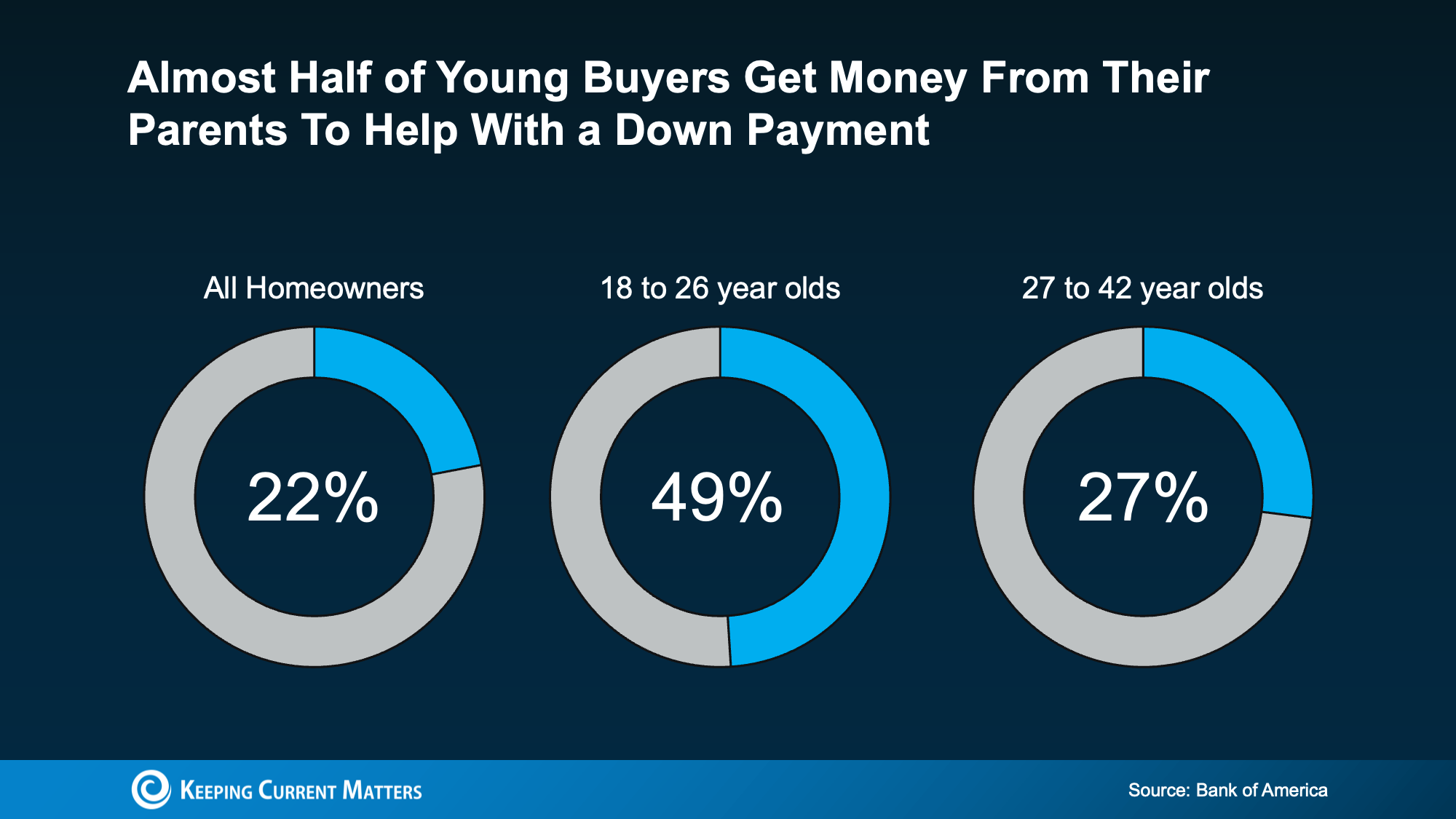
According to Bank of America, 49% of buyers between 18 and 26 got money from their parents to use toward their down payment (see chart below):
Even though the data doesn’t specify how many parents used their equity, the wealth they’ve built through homeownership may have helped make it possible – especially given how much equity the average homeowner has today.
While what’s right for each person’s specific situation will vary on a case-by-case basis, that’s a powerful legacy to pass on. It helps those younger people buy a home, build equity of their own, and begin the next chapter of their life with a little less financial stress and a lot more stability. And for those parents? It’s a way to turn what they’ve built into something deeply meaningful.
This isn’t just about money. For many homeowners, it’s about being the reason their child gets to say, “we got the house.” And giving them the kind of head start they might’ve only dreamed of at their age. And here’s the part that really sticks. Compare the Market says:
“Of those who did receive monetary aid from parents and grandparents to buy a house, 45% of Americans said they would not have been able to purchase a house without financial support from parents and grandparents.”
Bottom Line
Your equity could be the thing that makes homeownership possible for your children when they might not be able to do it on their own. So, here’s the question.
If helping your kids buy a home was more feasible than you thought, would you want to explore that option?
If you want to learn more or find out the best way to make it happen, talk to @carealestategroup and they’ll get you in touch with a lender and a financial advisor you can trust.
Let’s connect and plan your next steps. Call or text us! 🙂
CA Real Estate Group | Caliber RE Group
If you’re thinking about selling and want to know how your home should be positioned in today’s market, I’d be happy to help.
Here’s an informational tidbit you probably don’t want to hear: As temperatures drop, many rodents will be attracted to your home for the same reasons you are: They’re seeking a warm, cozy shelter with food. And they’re not just creepy—left unchecked, these pests can wreak havoc on your health and home.
“Although they may be small in size, rodents can cause big problems for homeowners once inside. Known to spread more than 35 diseases worldwide, rodents are considered one of the most dangerous public health pests in America,” says Jim Fredericks, chief entomologist for the National Pest Management Association. “In addition to the health threats they pose, rodents are capable of causing significant property damage.”
For example, if they get behind the walls of your home, they can chew through materials like plastic, wood, and drywall. They’re also capable of chewing through wiring, increasing the risk of electrical fire.
While rodents pose a threat year-round, Fredericks says mice and rats invade an estimated 21 million U.S. homes each winter. To keep them from running rampant on your property, put these tips into practice.
Eliminate access points around the house
Mice can squeeze through openings as small as the size of a dime, and their rat cousins can fit through holes the size of a quarter, experts say. This means even the tiniest cracks and crevices should be sealed, including cracks and holes inside and outside the home.
“It’s critical to eliminate access points by inserting door sweeps, repairing damaged window and door screens, sealing exterior cracks, and replacing loose mortar,” says Fredericks. “Any gap under a door that is larger than a quarter-inch can permit mice to enter and should be closed by repairing thresholds or installing door sweeps.”
Openings to chimneys should be regularly inspected, including the damper, which should always be closed when not in use, says Kevin Busch, vice president of operations at Mr. Handyman.
“Inspect and repair holes in your gutters, roof, fascia, siding, and foundation,” Busch says.
The best materials to use for sealing cracks and holes in your home’s exterior? Busch says expanding foam insulation, caulking, metal screening, or even a small piece of sheet metal will work great.
Inspect all packaging before bringing it into the home
With the ongoing coronavirus pandemic, more people are relying on online ordering for groceries, household supplies, and meal delivery. This cardboard packaging can be enticing to rodents searching for food and, as gross as it sounds, give them a free ride into your home.
“If packages with food are left outside for extended periods of time, they can attract mice and rats who can easily chew through cardboard boxing,” says Fredericks. “Be sure to promptly bring any deliveries inside and inspect packages for signs of rodent damage, or even an infestation inside the box itself.”
Properly store food and dispose of garbage
Critters are always looking for their next meal. Experts suggest storing food in airtight containers, disposing of garbage regularly, and using a sealed trash receptacle to prevent hungry rodents from getting into your food waste.
“Sealing up food and properly storing it is important because the odors attract unwanted animals,” says Craig Gjelsten, vice president of operations for Rainbow International. “Mice, rats, and other pests are attracted to rotting food and animal waste products.”
Keep attics, basements, and crawl spaces ventilated and dry
Eliminating any sources of moisture—including repairing leaking pipes and clogged drains—can help keep rodents at bay.
“Just like humans, rodents need water in order to survive,” says Fredericks. “In general, it’s a good idea to eliminate sources of moisture inside your home by keeping attics and basements well-ventilated while also repairing any leaking pipes or clogged drains.”
Keep outdoor spaces clear and clean
To keep unwanted critters from entering your home, be sure to do regular landscaping and yard maintenance.
“Trim back trees so animals can’t climb onto the roof,” says Josh Sevick, president of The Ground Guys, which specializes in lawn care and landscaping.
Sevick also says to remove debris around your home and to keep firewood at least 20 feet from your house.
Safeguard your electrical system
Rodents have been known to chew throughstructural components like drywall, insulation, lumber, and electrical wiring. While all these threats are worth addressing, ignoring damage to your electrical system can be the most critical because it can lead to unnecessary fires, personal injuries, and property damage.
“While finding evidence of damaged wiring can be extremely difficult, if rodents are present in your home or business, you’ll have a few chewed wires,” says Josh McCormick, vice president of operations for Mr. Electric.
He says to pay attention to red flags like rodent droppings, skeletons, or noises of scurrying or banging in your walls. Evidence of rodent activity could also include loose pieces of insulation, damaged wires, or holes in walls.
“If you suspect or discover a rodent problem, contact a licensed pest control professional immediately,” says Fredericks.
Keeping Current Matters | Apr 30, 2025
For a long time, the housing market was all sunshine for sellers. Homes were flying off the shelves, and buyers had to compete like crazy. But lately, things are starting to shift. Some areas are still super competitive for buyers, while others are seeing more homes sit on the market, giving buyers a bit more breathing room.
In other words, it’s a tale of two markets, and knowing which one you’re in makes a huge difference when you move.
What Is a Buyer’s Market vs. a Seller’s Market?
In a buyer’s market, there are a lot of homes for sale, and not as many people buying. With fewer buyers competing for these homes, that means they generally sit on the market longer, they might not sell for as much as they would in a seller’s market, and buyers have more room to negotiate.
On the flip side, in a seller’s market, there aren’t enough homes for sale for the number of buyers who are trying to purchase them. Homes sell faster, sellers often get multiple offers, and prices shoot higher because buyers are willing to pay more to win the home.
The Market Is Starting To Balance Out
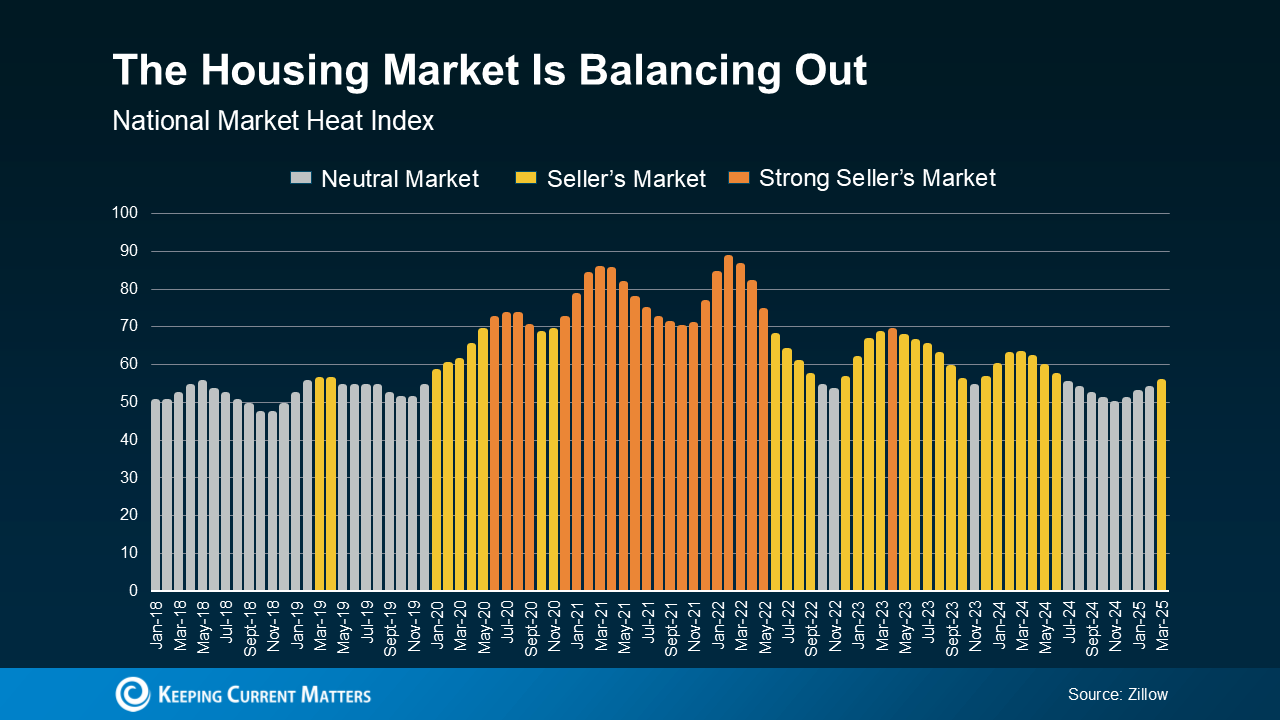
For years, almost every market in the country was a strong seller’s market. That made it tough for buyers – especially first-timers. But now, things are shifting. According to Zillow, the national housing market is balancing out (see graph below):
The index used in this graph measures whether the national housing market is more of a seller’s market, buyer’s market, or neutral market – basically, whether it favors buyers, sellers, or if it’s not really swinging either way. Each month, the market is measured between 0 and 100. The closer to 100, the bigger the advantage sellers have.
The orange bars in the middle of the graph show the years when sellers had their strongest advantage, from 2020 to early 2022. But, as time has gone on, the market has become more balanced. It shifted from a strong seller’s market to a less intense one. And lately, it’s been neutral more than anything else (that’s the gray bars on the right side of the graph). That means buyers are gaining some negotiating power again.
In a more balanced or neutral market, homes tend to stay on the market a little longer, bidding wars are less common, and sellers may need to make more concessions – like price reductions or helping with closing costs. That shift gives today’s buyers more opportunities and less competition than a couple of years ago.
Why Are Things Changing?
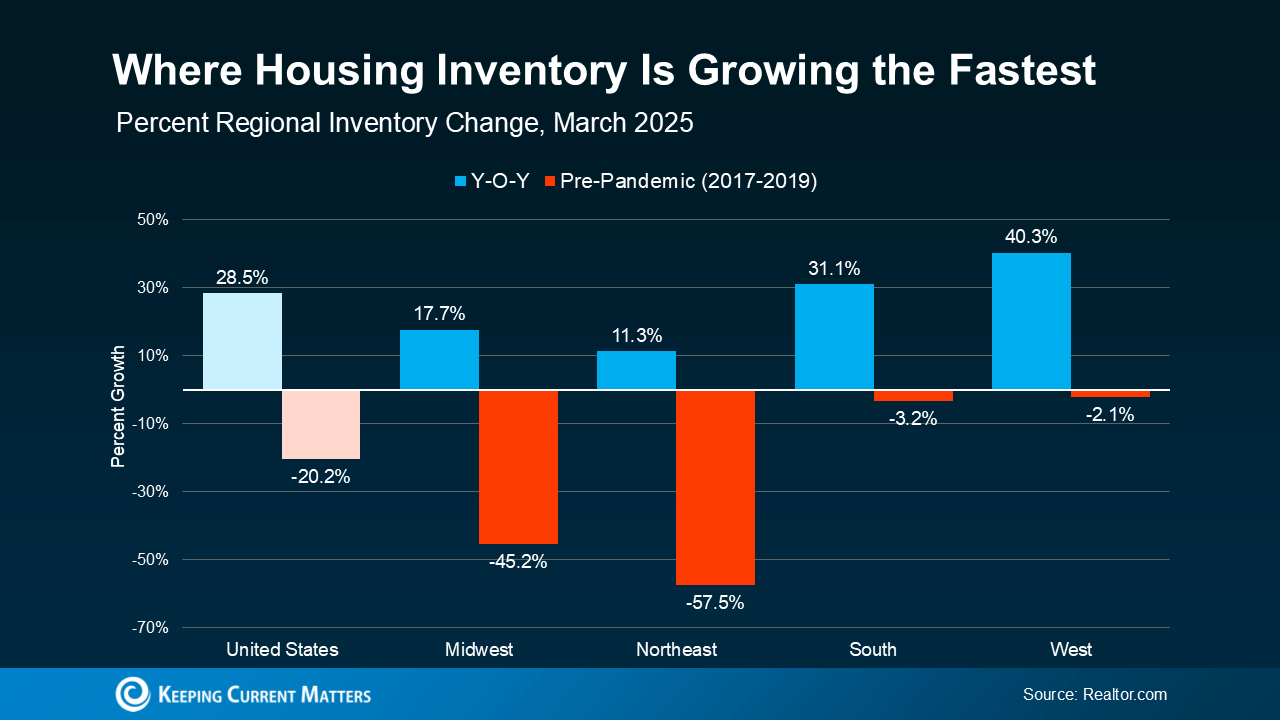
Inventory plays a big role. When there are more homes for sale, buyers have more options – and that cools down home price growth. As data from Realtor.com shows, the supply of available homes for sale isn’t growing at the same rate everywhere (see graph below):
This graph shows how inventory has changed compared to last year (blue bars) and compared to 2017–2019 (red bars) in different regions of the country.
The South and West regions of the U.S. have seen big jumps in housing inventory in the past year (that’s the blue on the right). Both are almost back to pre-pandemic levels. That’s why more buyer’s markets are popping up there.
But in the Northeast and Midwest, inventory is still very low compared to pre-pandemic (that’s why those red bars are so big). That means those areas are more likely to stay seller’s markets for now.
What This Means for You
Every local market is different. Even if the national headlines say one thing, your town (or even your neighborhood) could be telling a totally different story.
Knowing which type of market you’re in helps you make smarter decisions for your move. That’s why working with a local real estate agent is so important right now.
As Zillow says:
“Agents are experts on their local markets and can craft buying or selling strategies tailored to local market conditions.”
Agents understand the unique trends in your area and can help you make the best choices, whether you’re buying or selling. With their expert strategies, you can move no matter which way the market is leaning, because they know how to navigate various levels of buyer competition, how to find hidden gems locally, how to price a house right, how to negotiate based on who has more leverage, and more.
Bottom Line
If you’re ready to make a move, or even just thinking about it, connect with a local real estate agent. They’d love to help you understand your local market and create a game plan that works for you.
What’s one thing you’re curious about when it comes to the market in your area?
Let’s connect and plan your next steps. Find out if we’re the right real estate team for you!
CA Real Estate Group | Caliber RE Group
If you’re thinking about selling and want to know how your home should be positioned in today’s market, I’d be happy to help.
Lake Mission Viejo now has seating with a view outside the fences (of course, if you live in MV and have access to the lake, then go there!). You’ll find this seating on the side of the lake along Olympiad. You can literally park your car right there at the curb and enjoy the seating and view.
You can picnic near pretty much ANY playground at a picnic table or by setting up a picnic blanket:
Spring is in full swing, and the housing market is picking up along with it. And if you’ve been wondering whether now is the right time to buy or sell, here’s the inside scoop on why this spring may be a great time to make your move.
1. There Are More Homes for Sale
After a long stretch of tight inventory, the number of homes for sale is finally improving. According to recent national data from Realtor.com, active listings are up 27.5% compared to this time last year.
Look at the graph below and follow the green line for 2025. You can see, even though inventory levels still haven’t returned to pre-pandemic norms (shown in gray), that number is higher than it has been going into the spring market over the past few years (see graph below):
Buyers: This means you have more choices, and you can be more selective.
Sellers: With more homes available than in recent years, you’re more likely to find what you’re looking for when you move. And knowing that inventory is still below more normal levels means there will be demand for your home when you sell it, too.
2. Home Price Growth Is Moderating
As inventory grows, the pace of home price growth is slowing down – and that will continue into the spring market. This is because prices are driven by supply and demand. When there are more homes for sale, buyers have more options, so there’s less competition for each house. Rising supply and less buyer competition causes price growth to slow, but it should still remain positive in most markets. As Freddie Macsays:
“In 2025, we expect the pace of house price appreciation to moderate from the levels seen in 2024, while still maintaining a positive trajectory.”
And while prices aren’t dropping at the national level, every market is different. Some areas are seeing stronger price growth, while others are cooling off or even seeing some price declines.
Buyers: The slower pace of growth means prices aren’t rising as quickly as before – and that’s a relief. Any home you buy now is likely to appreciate in value over time, helping you build equity.
Sellers: While prices are still rising, you might need to adjust your expectations. Overpricing your house in a more balanced market could mean it takes longer to sell. Pricing your house competitively is going to be key to attracting offers.
3. Mortgage Rates Are Stabilizing
One of the biggest hurdles for buyers over the past couple of years has been high, volatile mortgage rates. But there’s some good news – overall, they’ve stabilized in recent weeks – and have even declined a bit since the beginning of this year. And while that decrease hasn’t been a big drop, stabilizing mortgage rates has helped make buying a home a bit more predictable. According to Selma Hepp, Chief Economist at CoreLogic:
“With the spring homebuying season upon us, the recent improvements in mortgage rates may help invite homebuyers back into the market.”
Buyers: When mortgage rates are more stable, it’s easier to plan ahead because you have a better idea of what your future payment might be. But remember, rates will continue to be volatile. So, lean on your agent and your lender to make sure you know what the latest mortgage rate means for you.
Sellers: Slightly lower rates that are starting to stabilize are encouraging more buyers to move forward with their plans. That’s good for demand when you’re planning to sell your house.
4. More Buyers Are Returning
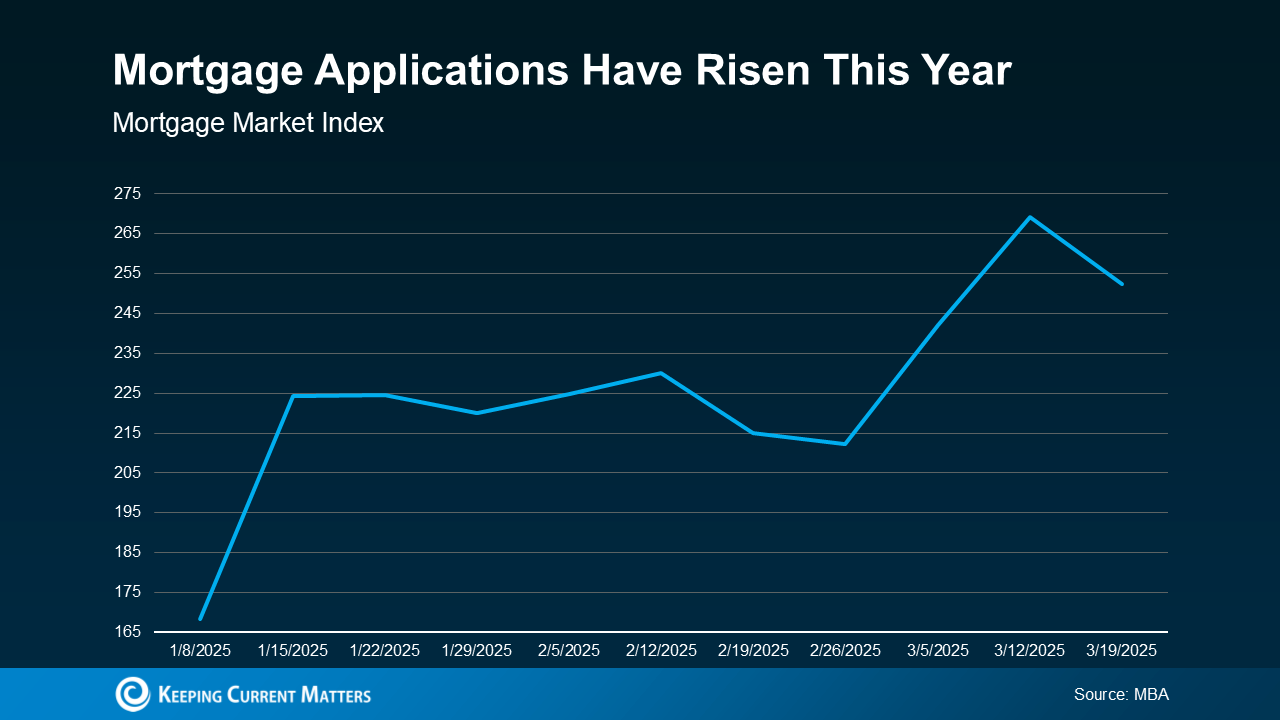
With more inventory, slowing price growth, and stabilizing mortgage rates, buyers are gaining confidence and coming back into the market. Demand is picking up, and data from the Mortgage Bankers Association (MBA) shows an increase in mortgage applications compared to the start of the year (see graph below):
Buyers: Acting sooner rather than later could be a smart move before your competition heats up even more.
Sellers: This is great news for you – more buyers mean a better chance of selling your house quickly.
Bottom Line
Do you have questions about what the spring market means for you? Connect with a local real estate agent and talk about how to craft your plan this season.
Who wants to go strawberry picking? Have you ever wanted to pick your own fruit, fresh from the farm? Is there any other family activity that’s as fun — and delicious? Not to mention educational, since you can help your kids learn about where their food comes from.
These hard-working family farms, near Los Angeles, and all over Southern California, offer the chance to go strawberry picking (or any other fruit in season) and enjoy seeing your food in its natural state. Sometimes called “U-Pick,” the idea is you and your family will do a bit of work and get to eat all the fresh fruit you gather.
In Los Angeles, we are lucky to be able to pick fruit all year long, nearby, within just a couple hours’ drive. The time to pick strawberries is in the spring. You pick cherries in the early summer, and apple picking happens in the fall. But there are also blueberries, apricots, plums, and pumpkins, too — just to name a few others. Plus there are all the vegetables!
Let’s go pick strawberries! Photo credit: California Strawberry Commission
Have you been searching for “Strawberry Picking Near Me in SoCal?” Or wondered about a “Strawberry Farm near me?” We’ve got you covered! You’ll find a U-Pick Farm Near Me on this awesome Google Map.
Pick Your Own Fruit: Locally Grown and Farm Fresh
We’ve got a great big list of farms to take kids where you can all pick your own fruits and vegetables. You can find U-Pick Farms in Orange County, San Bernardino, Ventura, and even San Diego County.
And if you’d rather not pick your own, most of these farms have terrific farm stands, some with drive-through, so you can get fresh fruit and veggies direct from the farm, whether you get your hands dirty or not.
Things to Know Before You Go
Wherever you go to pick, and whatever fruit you choose, we hope you and your family have a great time!
Fruits they grow: Strawberries, as well as other fruits and vegetables.
Farm Market Hours: Wednesday – Saturday 10:00 a.m. to 4:00 p.m. and Sunday 11:00 a.m. to 4:00 p.m. (Closed Mondays and Tuesdays)
U-Pick Information: $10 Admission. The picking season generally starts about April 15th each year. Be sure to check their website as well as Instagram and Facebook pages for the most up-to-date information.
Underwood: Moorpark Farm Center 3370 Sunset Valley Road, Moorpark, CA 93021
(805)529-3690
info@underwoodfamilyfarms.com
Fruits they grow: Strawberries, as well as many other fruits and vegetables including tomatoes, cauliflower, carrots, lettuce, and much more. Underwood is well-known for its seasonal festivals (Springtime Festival, Fall Harvest, and Christmas on the Farm).
Moorpark Farm Center Hours: Daily 9:00 a.m. to 6:00 p.m. Closed on certain holidays, closing early on the days before certain holidays. Check their website for details.
Underwood: Somis Farm Center
5696 E. Los Angeles Ave, Somis, CA 93066
(805) 386-4660 info@underwoodfamilyfarms.com
Fruits they grow: The Somis location has been open since 1980 and offers a variety of fruits, vegetables, and specialty food items (jarred products, pickled vegetables, dried beans, honey, farm fresh eggs, flowers, and more).
Pick-your-own strawberries, blueberries, raspberries, blackberries, tangerines, and figs are offered by the season. Strawberries are usually available from March through mid-June.
When you go, be sure to visit the animal center where you can see pygmy goats, alpacas, sheep, and chickens.
Somis Farm Market & Animal Center Hours: Daily 9:00 a.m. to 5:00 p.m. (6:00 p.m. as of 3/9/2025). Closed on certain holidays, closing early on the days before certain holidays. Check their website for details.
This farm has “U Pick Strawberries Near Me” if that’s what you’re looking for! Photo credit: California Strawberry Commission
In the fall, try our list of Farms for Apple Picking, many of which are located in San Bernardino County.
Pick Your Own Fruit — San Bernardino County
Los Rios Rancho 39611 Oak Glen Rd., Oak Glen, CA 92399
(909) 797-1005
info@losriosrancho.com
Fruits they grow: Los Rios Rancho was established in 1906 and is known as the “largest and oldest Apple Farm in Southern California.” While they are known as an Apple Farm, Los Rios Rancho includes more than 150 acres and offers a variety of organically-grown berries, pumpkins, corn, and more. More than three acres are dedicated to strawberries, and picking season usually starts in mid-May. They also host a number of special events and festivals throughout the year.
Current Hours: Thursday – Tuesday 10:00 a.m. to 5:00 p.m. (They are closed on Wednesday and they are temporarily closed on Thursday and Friday as well)
Family Farms
13406 Cypress Ave., Chino, CA 91710
(909) 717-5871
Fruits they grow: Family Farms in Chino welcomes families to pick their own strawberries seven days a week from 7:30 a.m. to 5:00 p.m. No reservation is needed. $10 per person, which includes entry and a basket of strawberries. For the most up-to-date information, be sure to check their Instagram and/or Facebook pages.
Fruits they grow: In late spring and early summer, you can pick Nicolson’s juicy, delicious strawberries from Thursday through Sunday, 10:00 a.m. to 4:00 p.m. Check their Facebook or Instagram pages for more information.
Berry Picking Farms — Orange County
Tanaka Farms 5380 3/4 University Dr., Irvine, CA 92612
(949)653-2100
info@tanakafarms.com
Fruits they grow: Tanaka Farms is a thirty-acre, family-owned and operated farm, established in 1940. Families can opt to take a Strawberry Picking Tour, which includes a guided wagon ride with multiple stops, allowing families the opportunity to pick fruit right where they’re growing. Strawberry Picking Tours are offered on Saturday and Sunday, beginning March 1st, 2025. Reservations may be made online. You can also opt to visit and pick strawberries without the tour. Tanaka Farms is also well-known for its seasonal festivals and many family-friendly events offered throughout the year.
Produce Market Stand & Gift Shop Hours: Daily from 9:00 a.m. to 5:00 p.m.
(Keep in mind — all tours and activities require a reservation.)
South Coast Farms
33201 Ortega Hwy, San Juan Capistrano, CA 92675
(949)661-9381
southcoastcsa@gmail.com
Fruits they grow: South Coast Farms was established in 1996 and is San Juan Capistrano’s only Family Farm. They grow all of their produce without the use of pesticides or fungicides. South Coast Farms U-pick is currently open on Thursday through Sunday from 10:00 a.m. to 4:00 p.m. Be sure to check their Instagram and Facebook pages for the latest updates.
The Ecology Center
32701 Alipaz St., San Juan Capistrano, CA 92675
(949) 443-4223
Fruits they grow: The Ecology Center provides an “immersive, interactive farm experience featuring educational programming and a hands-on strawberry U-pick.” Using a field guide, families will first tour the farm and then go into the fields to “experience the bounty of the only Regenerative Organic strawberries available in Southern California.” Many special events are offered throughout the year including seasonal festivals, farm dinners, special children’s offerings, and more.
Hours: Farm Stand is open daily from 9 a.m. to 5 p.m.
U-Pick Strawberries is available on Saturday and Sunday ($15 per person) from 9:00 a.m. to 1:00 p.m.
Tickets are required and must be purchased in advance (free for children under 2).
Manassero Farms
33 Irvine Valley, Irvine, CA 92618
(949) 554-5103
Fruits they grow: Strawberry picking season at Manassero Farms has just begun. The Strawberry Picking Experience includes access to the field and a single 1-pound container. For those who do not wish to pick berries and would just like access to the fields, a ticket is required. Children under 2 are free. Reservations are required.
Hours: Open Monday through Saturday from 9:00 a.m. to 5:00 p.m.
Open on Sundays from 9:30 a.m. to 4:30 p.m.
Photo credit: California Strawberry Commission
Strawberry Picking — San Diego County
Carlsbad Strawberry Company
1050 Cannon Rd., Carlsbad, CA 92008
(760)603-9608
info@carlsbadstrawberrycompany.com
Fruits they grow: Carlsbad Strawberry Company has been growing strawberries for generations! U-Pick is predicted to open in late March or early April. Check the website for the latest information. And while you’re there, be sure to visit with the sheep, goats, and rabbits on the farm. Once the season begins, U-Pick is available daily from 9 a.m. to 5 p.m. Tickets may only be purchased on-site. (Visit in the fall, and you’ll find an epic Pumpkin Patch and corn maze.) They also have tractor rides and Bounceland, which will reopen soon and includes jump houses and slides for children.
Kenny’s Strawberry Farm
953 Rainbow Valley Blvd., Fallbrook, CA 92028
(888) 236-0101
info@kennysstrawberryfarm.com
Fruits they grow: Kenny’s Strawberry Farm has been growing delicious strawberries for over a decade. U-Pick opportunities usually open sometime in February or March each year. Be sure to check the website for the most up-to-date information and hours. (As of February 27th, 2025 the U-Pick Farm is closed for the season. According to Facebook, they are already sold out!)
The 65th Annual Garden Grove Strawberry Festival is scheduled for Friday, May 23rd (1 p.m. to 10 p.m.), Saturday, May 24th, and Sunday, May 25th (10 a.m. to 10 p.m. on both days), and Monday, May 26th (10 a.m. to 9 p.m.). This popular yearly event features carnival rides, live musical performances, vendor booths, games, and, of course, strawberries (and other non-strawberry food). Details, including parking information, are available online.
The California Strawberry Festival will take place on Saturday, May 17th, and Sunday, May 18th (10:00 a.m. to 6:30 p.m.). The Festival features over 40 food vendors, live musical performances, arts and crafts booths, and a Strawberryland for Kids (featuring rides, face painting, and more). Ticket information is available online.
Q: Is strawberry picking a good family activity?
A: Yes, you can pick strawberries with your kids, and you’ll all have fun.
Q: When is strawberry picking season?
A: Strawberry picking season varies by location and climate, but generally it occurs in the late spring and early summer months. In North America, strawberry picking season typically runs from late May to early July, although this can vary by region.
Q: What should I wear for strawberry picking?
A: It’s best to wear comfortable clothing that you don’t mind getting dirty, as well as closed-toe shoes. You may also want to wear a hat and sunscreen to protect yourself from the sun.
Q: What should I bring when picking strawberries?
A: You’ll want to bring a container to hold your strawberries, such as a basket or a plastic container with a lid. You may also want to bring water and snacks, as well as cash to pay for the strawberries.
Q: How do I know which strawberries to pick?
A: Look for strawberries that are fully red and plump. Avoid strawberries that are unripe or overripe. You can also gently squeeze the strawberry to see if it’s ripe – it should be slightly soft to the touch.
Q: Can I eat the strawberries while picking?
A: It’s generally okay to eat a few strawberries while picking, but be sure to ask the farmer or staff at the farm if it’s allowed. They may have specific rules about eating while picking.
Q: Can I bring my pet with me to pick strawberries?
A: It’s best to check with the farm beforehand, as some may not allow pets due to health and safety concerns.
Q: Can I bring my own containers to pick strawberries?
A: It’s best to check with the farm beforehand, as some may have specific rules about the types of containers that are allowed. They may also provide containers for you to use.
Q: How much do strawberries cost when picking your own?
A: The cost of strawberries can vary depending on the location and the farm. You can expect to pay by weight or by the container. Prices may also vary depending on the ripeness and quality of the strawberries.
Q: How long do picked strawberries last?
A: Picked strawberries will typically last for a few days in the refrigerator. It’s best to eat them as soon as possible for the freshest flavor. You can also freeze strawberries for longer storage.
Disclaimer: MomsLA has made every effort to confirm the information in this article; however, things can often change. Therefore, MomsLA makes no representations or warranties about the accuracy of the information published here. MomsLA strongly urges you to confirm any event details, like date, time, location, and admission, with the third party hosting the event. You assume the sole risk of relying on any of the information in our list. MomsLA is in no way responsible for any injuries or damages you sustain while attending any third party event posted on our website. Please read our Terms of Use which you have agreed to based on your continued use of this website. Some events have paid to be listed on MomsLA.
Springtime is upon us and the milder days of spring are a perfect time to do a thorough spring cleaning and perform home maintenance. After a long winter, it is a good idea to spend time on preventive measures to help maintain your home and property throughout the year. Tasks such as cleaning out your gutters, checking for dead trees and branches and cleaning and inspecting home mechanical and plumbing systems, such as heating and air conditioning equipment, can help make spring a season of safety.
Cleaning and maintenance of your home should be done inside and out. Although the tasks are different, checking to see if all the elements of your home are in good working order can help keep your family safe and your maintenance expenses lower over the long run. And if a task is overwhelming and you want to leave it up to the pros, call us for referrals!
Fri, Mar 14, 2025
The Irishman (Huntington Beach): Corned beef! True Irish! Sunday & Monday open at 11AM. 424 Olive Ave, Huntington Beach, CA 92648
Mickey’s Irish Pub (Fullerton): 𝐂𝐀𝐋𝐋𝐈𝐍𝐆 𝐀𝐋𝐋 𝐋𝐄𝐏𝐑𝐄𝐂𝐇𝐀𝐔𝐍𝐒! Grab your green gear and head on down to your favorite pub in Fullerton on #StPaddysDay! We’ve got a 𝐋𝐈𝐕𝐄 fiddler, bagpiper, 𝐆𝐑𝐄𝐄𝐍 𝐁𝐄𝐄𝐑, special Irish food menu & 𝐌𝐎𝐑𝐄! 𝐎𝐏𝐄𝐍 𝐀𝐓 9𝐀𝐌! 𝐀𝐑𝐑𝐈𝐕𝐄 𝐄𝐀𝐑𝐋𝐘 𝐓𝐎 𝐀𝐕𝐎𝐈𝐃 𝐋𝐈𝐍𝐄𝐒! 100 N Harbor Blvd, Fullerton, CA 92832
Bangers and Mash with Guinness Gravy and fried cabbage
Braised Lamb “Meat Pies”—-puff pastry with mashed potato base and braised lamb, carrots and celery
Jameson Whiskey Glazed Chicken Wings
Corned Beef Grilled Cheese on Marbled Rye with Irish Cheese
Caramelized Onion and Guinness Dip with Irish Soda Bread Crisps
Irish Popcorn with Jameson Caramel
Guinness Brownie with Nitrogen Ice Cream
122 N. Glassell St., Orange
Durty Nelly’s (Costa Mesa): St. Patrick’s Day menu! Green beer, $7 Jameson shots, Karaoke at 6pm. 2915 Red Hill Ave., Costa Mesa
Malarky’s (Newport Beach): We are kickin’ off St. Paddy’s Day at 6am! Enjoy pints of green beer, brunch, drink specials, shamrock shenanigans & 𝐌𝐎𝐑𝐄! 𝐃𝐎𝐎𝐑𝐒 𝐎𝐏𝐄𝐍 𝐀𝐓 6𝐀𝐌! 𝐀𝐑𝐑𝐈𝐕𝐄 𝐄𝐀𝐑𝐋𝐘 𝐓𝐎 𝐀𝐕𝐎𝐈𝐃 𝐋𝐈𝐍𝐄𝐒! 3011 Newport Blvd, Newport Beach, CA 92663
Muldoon’s Pub (Newport Beach): Get ready for the ultimate St. Paddy’s Day celebration at Newport Beach’s favorite Irish Pub! Join us starting at 9am on March 17 for shamrocks, shenanigans, and nonstop craic as we raise a pint to Ireland’s biggest day! We’ve got a special breakfast & lunch menu, a live bagpiper & fiddler, swag & more! Arrive early to the party to avoid lines, Sláinte! 202 Newport Center Drive, Newport Beach
Sidedoor (Corona del Mar): St. Pat’s Specials and Leprechaun Seamus O’Malley! Celebrate St. Paddy’s Day at SideDoor! Get ready for a night of Irish cheer! Join us on March 16th from 5:30 PM to 7:30 PM for an unforgettable St. Patrick’s Day celebration! Sing along to lively Irish tunes, feast on Corned Beef & Cabbage ($31) and SideDoor favorites, and hear whimsical folk tales from Seamus the Leprechaun!
$24 ticketed event | Family-style seating
Tullamore D.E.W. flights, Guinness on draft, and more!
Don’t miss this magical evening of music, stories, and Irish spirit!
3801 East Coast Highway, Corona Del Mar
The Original Patsy’s Irish Pub (Laguna Niguel): St. Patrick’s Day is quickly approaching! Here’s a fun lineup for March 15-17!
– March 15: live band, “No. 12 Saloon” – 8:00pm to 12:00am
– March 16: live band, “The Universals” – 4:00pm to 8:00pm
– March 17: Patsy’s opens at 11:00am, $10 All day access ticket to entertainment and festivities:
Face painting
Photo ops
12:00pm to 9:00pm, Kitchen serving special event day menu
1:00pm to 3:00pm, “Plucky Charms” band performs
4:00pm to 8:30pm, “Selly & the Strays,” band performs
9:00pm to 1:00am, DJ and Dancing
28971 Golden Lantern #108, Laguna Niguel
Heritage Barbecue (San Juan Capistrano): Make your own luck this 𝗦𝘁. 𝗣𝗮𝘁𝗿𝗶𝗰𝗸’𝘀 𝗗𝗮𝘆 weekend with these chef-curated specials. Available until sell-out Saturday, March 16th and Sunday, March 17th! 31721 Camino Capistrano, San Juan Capistrano
Hennessey’s (several locations): Get ready for St. Patrick’s Day Weekend at Hennessey’s Tavern! March 14-17: Hennessey’s Tavern’s Famous CORNED BEEF & CABBAGE Plate is back for just $25! Served all day & night from March 9–17. Don’t miss out—grab yours before it’s gone for another year! Join us as we kick off the celebrations early because when St. Paddy’s falls on a Monday, the whole weekend turns green. Make Hennessey’s your St. Patrick’s Day headquarters, and let’s paint the town green together! 34111 La Plaza, Dana Point; 31761 Camino Capistrano, San Juan Capistrano; 213 Ocean Ave., Laguna Beach; 1773 Newport Blvd., Costa Mesa; 143 Main St., Seal Beach
Over the past 5 years, home prices have risen dramatically. If you own a home, that means your house may be worth a lot more than you think.
Nationally, prices are up nearly 60% since 2019. And, if selling has been on your mind, you can use that bigger-than-expected return to power your next move.
If you want to know how much your home is worth in today’s market, reach out to CA Real Estate Group. The number may surprise you.
Let’s connect and plan your next steps. Find out if we’re the right real estate team for you!
CA Real Estate Group | Caliber RE Group
If you’re thinking about selling and want to know how your home should be positioned in today’s market, I’d be happy to help.

 This tells you something important: not all buyers are willing to pay what many sellers are asking. That doesn’t mean you can’t sell for a great price – but it does mean you need to start with a price that reflects what people are willing to pay in today’s market.

 Buyers: This means you have more choices, and you can be more selective.
 Buyers: Acting sooner rather than later could be a smart move before your competition heats up even more.