? Water is not always our friend. Sure, we drink it, swim in it, and need it to survive, but when it comes to homes, it can destroy the foundation, says home inspector Thomas Dabb of Immaculate Home Inspections in South Orange, N.J.

? Water can enter a home from the exterior and interior, so buyers and homeowners need to keep their eyes open for signs of its presence—or worse—its damage.

? The good news is that there are many experts available to spot and diagnose a problem and suggest the best fix. Water expert Steve Barckley with Exceptional Stone Products in Livingston, N.J., believes that homeowners should start by doing everything possible on the outside of the homes to correct problems and divert water away from a foundation.

? Share these seven solutions with your family and friends to help them minimize a foundation’s damage in various scenarios.

5 Home Organization Rules Families Need Now for a Smooth Return to School

By Kathleen Willcox | Realtor.com | Sep 30, 2021

Fall means crisp weather, pumpkin-spiced everything, and school and work officially back in session. Since many parents and children spent much of the past 18 months learning and working from home, excitement and stress are at all-time highs.

To tame the chaotic transition from home to school, experts say a little reorganization is key to easing back into the world. Sure, our skills may be rusty, yet with these expert tips and strategies on how to streamline breakfast, lunch, and safety prep, you and your family will be pros in no time.

1. Create a command center

Whether you have a dedicated mudroom or live in a small space, the foundation to organizational success lies in creating a school command center, says Jennifer Johnson, owner of the Closets by Design of the Palm Beaches and Treasure Coast franchise.

“The vast majority of the more than 56 million kids in K-12 in the U.S. carry a backpack,” Johnson says. “Consider installing hooks for everyone who needs to hang a backpack.”

Above the hooks, add a row of cubbies or cabinets—or a simple shelf with baskets—for the perfect place to put any school supplies, sports equipment, or musical instruments your kids need.

Adding a dry-erase board will ensure that you can track upcoming tests, games, and deadlines.

2. Create a safety station

Every school and region has different rules regarding masks and hand sanitizer, but most suggest (or require) one or both.

One way to make sure your children are following the regulations is to install a safety center at the door that you use every day, advises Laura Ritterman, a mother and owner of food blog the Recipe Fairy.

Have a basket with clean masks, disinfectant wipes, and portable hand sanitizer so family members can easily grab them before heading out.

“Making sure these little details are in place makes things just a bit easier for all,” Ritterman says.

3. Pick the right gear to hold supplies

Some families might be dusting off a lunchbox that hasn’t been used in 18 months—and they just might find some long-forgotten apple slices (or worse) in there.

“It may be time to upgrade some of your kids’ school accessories,” says Eva Petruzziello, a Toronto-based teacher and owner of the sustainable living website SimplenDelight.

She recommends finding a lunchbox with a built-in zipped pocket to store a few extra masks and a bottle of hand sanitizer.

This way kids can easily access supplies to clean their hands before and after they eat, and switch to a new mask if one gets sticky.

4. Plan breakfast

There are a number of ways to tackle breakfast and ensure that everyone will get a healthy, tasty meal—without a side of stress.

If you have young kids, it helps to make breakfast ahead of time.

“I love to prep breakfasts on the weekend,” says Michelle Keldgord, co-founder of Baking How in Southern California. “That way I can make sure my kids are getting plenty of nutrition, but it’s not as chaotic in the morning. I’ll make oatmeal, quesadillas, waffles, and muffins ahead of time, and reheat as needed.”

For older kids, Ritterman says a cereal bar station makes things both easy and fun for everyone.

“I put together a little station with plastic containers with nozzles filled with our favorite cereal,” she says. “I also leave cut fruit in the fridge that’s easy to reach.”

If you really want to streamline, you can place bowls, spoons, and napkins next to the bar, too.

For older kids, Petruzziello suggests agreeing on simple-to-prepare items—such as cereal, toast, fresh fruit, or yogurt—which they can grab on their own schedule.

“Encouraging kids to be independent will help both of you,” she notes.

5. Simplify packing lunches

To keep the morning vibe mellow, lunch should also be as complete as possible before your alarm goes off.

“If you have younger kids, put all snacks and drinks into their lunchbox the night before,” says Petruzziello. Sandwiches and mains can be quickly added during the breakfast rush, she says.

Older kids can be involved in the prep the night before.

“Have a cupboard for healthy snacks only at kids’ eye level,” Petruzziello advises. “This way it’s easy for everyone to help pack a three-snack, one-meal lunch.”

It also helps to have a drawer or shelf in the refrigerator dedicated to portable containers for fresh fruit and veggies that you can easily grab.


Some Highlights

5 Fabulous Ideas To Give Your Foyer a Face-Lift, Straight From Instagram

By Larissa Runkle | Realtor.com | Sep 10, 2021

We love the feeling of walking into a foyer that’s perfectly styled. Unfortunately, entryways are one of those spaces that seem to be in a constant state of chaos—especially after months of gardening, football practices, beach and pool days, and more.

If you’re ready to sweep out the sand and soil and polish up your entryway, then you’re going to love this week’s Instagram-inspired decor trends. With gorgeous statement pieces and small must-have accents, this list has a style upgrade for your foyer that’s within every budget.

1. Funky railings

Looking to go big and mix up your decor? Then you just might like this funky railing inspiration from @theryanhaus_.

“With so many homes featuring a staircase as soon as you walk in the door, more and more homeowners are looking to make their railings a statement,” says designer and co-founder Betsy Moyer of Retreat Designs. “Ornate iron railings are falling to the wayside as combinations of rustic and modern flood into the zeitgeist.

“From this mix of weathered wood and horizontal cable, to the more art deco pattern–inspired wrought iron, I’m liking what I’m seeing with these new funky railings,” she adds.

Get the look: Design your very own funky railing with Custommade.

2. Leather organizing baskets

These trending leather baskets from @celebratedspaces are so cute there’s basically no reason not to snag a few (especially since they also make storage stylish—a win-win).

“We are all about extra storage looking like art,” says Moyer. “Elements in repetition always create a visual balance that the eye loves. Selecting a natural, textural material like sea grass or leather hides the colorful contents and keeps the palette peaceful, plus it provides great options for entryway clutter.”

Get the look: Corral your clutter with this two-piece leather bucket set.

3. Concrete accent table

Concrete has been all over the outdoor decor scene for a while—and now, thanks to design-savvy influencers like @bloomandbabe, it’s made a debut inside, specifically in the foyer.

“A concrete table adds a sense of strength and stability to the room,” says designer Andra DelMonico, of Trendey. “Concrete easily blends with a variety of interior design themes—from industrial, rustic, elegant, or even bohemian. Look for a concrete piece that creates a presence but won’t be too visually heavy in the room.”

Get the look: Shop this Byron waterfall console table.

4. Extra-large wall clock

Big clocks aren’t just for train stations, and @homesweet4everhome offers the proof.

“Adding an oversized clock is an easy solution for an empty wall,” says DelMonico. “The clock is both decorative and functional—perfect for entryways as a focal point over a console table. Skip the overused standard large wall clock and opt for something creative.”

Get the look: Try this oversized Bowdoin wall clock for a look that’s anything but boring.

5. Vanity-inspired bench

There’s something incredibly nostalgic about a vanity bench, and @scoutdesignstudio is here to show us just how well it works in the entryway.

“The vanity bench is a great style moment,” says Moyer. “It acts as another surface to fill the space beneath the console and naturally doubles as spare seating when you need a lingering goodbye at the door or spare seating for a holiday party.”

Get the look: Complete your foyer table with this Rainer upholstered bench from Wayfair.

Keeping Current Matters | September 10, 2021

When it comes to the current housing market, there are multiple misconceptions – from what the current supply of available homes looks like to how much houses are selling for.

It takes professionals who study expert opinions and data to truly understand the real estate market and separate fact from fiction.

Trust the pros at CA Real Estate Group.  If you want to understand why it’s still a good time to buy, let’s connect today.

CA REAL ESTATE GROUP TEAM MEMBERS:

?? Team Lead: Christine Almarines @carealestategroup
Realtor | DRE # 01412944
CA Real Estate Group | Keller Williams Realty
714-476-4637 | christine@carealestategroup.com

?? Maelyn Galapir @soldwithmaelyn
Realtor | DRE # 02031676
562-508-7819 | maelyn@carealestategroup.com

?? Michelle Kim @michellejeankim_homes
Realtor | DRE # 01885912
714-253-7531 | michelle@carealestategroup.com

Jennifer Kelly Geddes | Realtor.com | Mar 29, 2018

What are the best trees for privacy, shade, and your yard in general? Such questions are well worth asking, since not all flora are created equal. For instance, certain trees are yard maintenance nightmares. Other trees give and give—keeping you cool under the hot sun, shielding you from nosy neighbors, bearing fruit, and sprouting flowers—the list of benefits goes on and on!

Curious about which trees top landscapers’ lists? The first step is to identify your area’s planting zone, so you know what’s most likely to survive and thrive. These zones, as determined by the U.S. Department of Agriculture, are based on the average minimum winter temperature. With respect to your planting zone, here are some recommendations to help you pinpoint the best trees for shade, privacy, and your yard in general.

Best trees for shade


Photo by orlando comas

The mighty oak, shown in the photo above, is your go-to for shade in nearly every planting zone in the U.S.

“Oaks provide extensive, deep shade due to the density of their leaves,” reports Cassy Aoyagi, president of FormLA Landscaping in Los Angeles.

Both oaks and sycamores can cool the air beneath their canopies by as much as 20 degrees Fahrenheit, she notes.

For homeowners in zone 6 and warmer climates, look to flowering dogwood, shown in the photo below, and white spruce, says Burt DeMarche, president of the LaurelRock Co., a landscape architectural firm in Wilton, CT.


Photo by Plan-it Earth Design

“Dogwoods are great native understory trees that provide a splash of color, with pink or white spring flowers and burgundy red fall foliage,” he says.

Are you more into evergreens?

“White spruce is one of the most tolerant evergreens, with a heavy cone in the top branches throughout the fall and winter, which gives it a very Alpine feel,” he adds.

Best trees for privacy


Photo by Coates Design Architects Seattle 

The conical Leyland cypress trees, shown on the right in the photo above, can create lush cover between homes for privacy.

“These fast-growing trees can grow 3 feet in a year and thrive in zones 6 to 10, which is a large part of the U.S.,” explains Chris Lambton, a landscaping expert on “Lawn & Order” and host of “Yard Crashers.”

Other options include American holly evergreen, with beautiful red berries in winter, green giant arborvitae, and Japanese holly, which grows compactly and is an excellent tree for screening.

DeMarche is also a fan of the green giant, shown in the photo below.

“It makes a terrific hedge at 6 to 25 feet tall, plus its deep, green foliage has a uniform, luxurious sheen, and it’s deer-resistant,” he points out.


Photo by Cording Landscape Design

Best trees for front yards


Photo by FormLA Landscaping

Want a real showstopper tree for your front yard? First, consider the space and available light, as well as the architecture of the home and the impact you’re trying to achieve, says Aoyagi.

If you have a large space, try a sycamore, shown above, which meshes well with many architectural styles and across many climates.

“In small spaces, I recommend the Western redbud, palo verde or desert willow [shown in the photo below], which have extended bloom times and pretty leaves—particularly redbuds, which range from green to bright red and burgundy in the fall,” she adds.


Photo by Treeland Nursery 

Or try a Japanese flowering crab apple, with red buds that turn pink and then white before dropping, says DeMarche. “This tree attracts birds, butterflies, and hummingbirds.”

The tricolor European beech is also a stunning tree in the yard, he adds. “It sits beautifully as a stand-alone feature in an open space with green and white variegated foliage.”

Best trees near the house


Photo by Katia Goffin Gardens 

Upright European hornbeams (shown on the left in the photo above) work well as an anchor at the corner of a house in zones 6 and warmer, says DeMarche.

“Its narrow form when young eventually morphs into a teardrop shape that can readily be sheared to maintain an overall size of 10 to 20 feet,” he notes. “It also makes a great statement within foundation planting and is care-free with regard to insects and diseases.”


Photo by Wagner Hodgson

Other colorful trees in this category include the easy-care ivory silk Japanese lilac (shown in the photo above), which sports bright flowers in June, and the serviceberry, with small, edible fruit and blue-green leaves in the fall, says Craig Jenkins-Sutton, president of Topiarius.

Best trees and shrubs for landscaping


Photo by Matthew Cunningham Landscape Design LLC 

“The Japanese stewartia (shown in the photo above) is the perfect foundation tree, topping out at 8 to 18 feet in maintained landscapes,” says DeMarche. “Its large, camellia-like white flower in June and July provides spectacular display and is followed by a rich mix of scarlet, pink, purple, orange, yellow, and green foliage in the fall.”

And don’t forget sizable shrubs and bushes with your tree mix. Lambton’s favorite landscaping flowers are hydrangea for its gorgeous blooms all summer and into the fall, and rhododendron for its variety of colors and early spring blooms.


Crave Shade? The No-Brainer Upgrade Your Outdoor Space Needs This Summer

By Jennifer Kelly Geddes | Realtor.com | Aug 6, 2021

If your home’s outdoor space could stand for a bit more shade or protection from the elements, an awning may be just the ticket.

At its most basic, an awning is a piece of material attached to your house that unfurls to cover a patio, deck, door, or window. It can be permanent or retractable (with either a hand or motorized crank).

An awning shields areas from the sun, allowing outdoor areas to become more shady, cooler, and usable during the hottest hours of the day. You’re also protected from rain, which means you won’t have to cancel so many cookouts with neighbors. All in all, awnings can create more livable space outside your house that you can use in all kinds of climate and weather.

But awnings actually do a lot more than serve as a buffer from the elements. Here’s more about awnings, from their secret benefits (both indoors and out) to the various styles and materials you can consider, plus some tricked-out awning upgrades that’ll make your summer all the sweeter.

The benefits of an awning

Although the main benefit of an awning is its power to transform outdoors areas into shady spots you can use regardless of sun and rain, one oft unsung benefit is the money you’ll pocket in energy savings—particularly for awnings placed over windows.

According to the U.S. Department of Energy, awnings over windows can cut the amount of summertime sun your home gets by 65% on south-facing windows, and 77% on western ones.

So if you’d like to run your air conditioning a lot less, an awning that covers one or more of your hot sunny windows is the ticket.

Plus, awnings protect not only outdoor areas, but indoor spaces, too. With less sun streaming in, it can help safeguard your interior furnishings (including wallpaper, flooring, carpets, upholstery, drapes, and artwork) from ultraviolet rays, which can cause them to degrade and fade over time.

And don’t forget the obvious curb appeal that awnings can provide. Awnings with thick stripes, coordinated piping or edging, or scalloped edges or small cutouts can brighten an otherwise quiet exterior or backyard.

Types of awnings

In addition to the classic retractable awning attached to your house, free-standing awnings can be erected and then moved as needed from your deck to the lawn.

If you plan on opening and closing an awning often, motorized models are ideal due to their ease of use if you can swing the added cost.

“Try to go for an automated retractable awning, because the last thing you want is to deal with gears and and pulls when you’re trying to relax on the patio,” says Drew Henry of Design Dudes.

Awning costs and upgrades

A basic awning for one set of front windows or to cover an average-size back deck will  cost $150 or so. Prices go up from here, of course, depending on how many extras you want. Awnings that open and close at the push of a button will cost more than one that simply retracts with a cord and your own muscle.

On the higher end, you can spend as much as $7,000 for the most tricked-out versions, which may include built-in heaters, speakers to play music, or a misting system that lightly sprays cool water.

Best fabrics for awnings

From classic stripes to solids and simple patterns, an awning’s design is limited only by your imagination and budget. Darla DeMorrow, author of “Organizing Your Home With SORT and SUCCEED,” urges homeowners to select Sunbrella or similar fabric for outdoor awnings.

“It’s truly the gold standard for every outdoor accessory and comes in loads of colors that’ll coordinate with your home’s style,” she says.

This wonder material costs more, but it’s worth it as the fabric is highly durable; is resistant to water, mold, and mildew; and won’t fade quickly under the hot sun. Sunbrella allows some light through while also blocking dangerous UV rays and excess heat.

As for awning colors, stick to shades that match your house.

“If your home is white with green shutters, the safe bet is to install a white awning with green stripes,” says Henry.

Awning maintenance

After installing an awning in the front or back of your house, don’t let rotting leaves, bird droppings, pine sap, and other debris linger on the fabric or become rolled up inside when you retract it. Aim to give your awning a good wash twice a year by spraying it with a hose and using a long-handled brush and a gentle soap to remove stains.

Your awning’s arms and braces can also be cleaned, or you can call in a pro to do the job. (The pro might also check the gears, handle, and other motorized parts to ensure they’re in good working order.)


Article from Keeping Current Matters | Sep 7, 2021

If you’re trying to decide when to sell your house, there may not be a better time to list than right now. The ultimate sellers’ market we’re in today won’t last forever. If you’re thinking of making a move, here are four reasons to put your house up for sale sooner rather than later.

1. Your House Will Likely Sell Quickly

According to the Realtors Confidence Index released by the National Association of Realtors(NAR), homes continue to sell quickly – on average, they’re selling in just 17 days. As a seller, that’s great news for you.

Average days on market is a strong indicator of buyer demand. And if homes are selling quickly, buyers have to be more decisive and act fast to submit their offer before other buyers swoop in.

2. Buyers Are Willing To Compete for Your House

In addition to selling quickly, homes are receiving multiple offers. That same survey shows sellers are seeing an average of 4.5 offers, and they’re competitive ones. The graph below shows how the average number of offers right now compares to previous years:Reasons You Should Consider Selling This Fall | MyKCMBuyers today know bidding wars are a likely outcome, and they’re coming prepared with their best offer in hand. Receiving several offers on your house means you can select the one that makes the most sense for your situation and financial well-being.

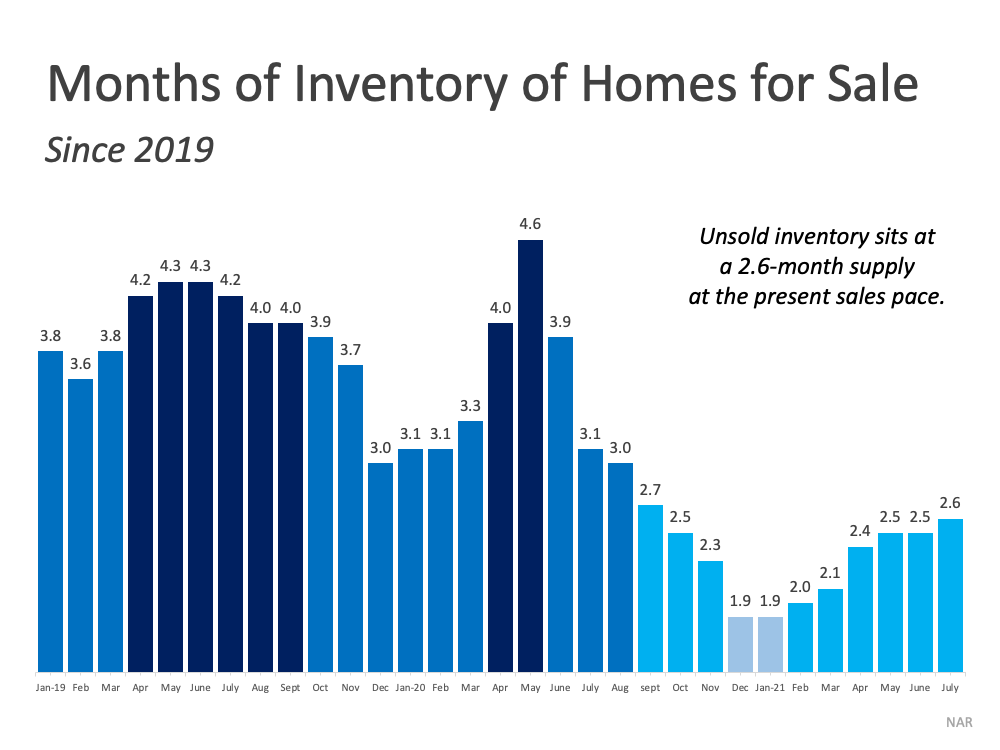
3. When Supply Is Low, Your House Is in the Spotlight

One of the most significant challenges for motivated buyers is the current inventory of homes for sale. Though it’s improving, it remains at near-record lows. The chart below shows how today’s low inventory stacks up against recent years. The lighter the blue is in the chart, the lower the housing supply.Reasons You Should Consider Selling This Fall | MyKCMIf you’re looking to take advantage of buyer demand and get the most attention for your house, selling now before more listings come to the market might be your best option.

4. If You’re Thinking of Moving Up, Now May Be the Time

If your current home no longer meets your needs, it may be the perfect time to make a move. Today, homeowners are gaining a significant amount of wealth through growing equity. You can leverage that equity, plus current low mortgage rates, to power your move now. But these near-historic low rates won’t last forever.

Experts forecast interest rates will rise. In their forecast, Freddie Mac says:

“While we forecast rates to increase gradually later in the year, we don’t expect to see a rapid increase. At the end of the year, we forecast 30-year rates will be around 3.4%, rising to 3.8% by the fourth quarter of 2022.”

When rates rise, even modestly, it’ll impact your monthly payment and by extension your purchasing power.

Bottom Line

Don’t delay. The combination of housing supply challenges, low mortgage rates, and extremely motivated buyers gives sellers a unique opportunity this season. If you’re thinking about making a move, let’s chat about why it makes sense to list your house now.


Contact the team at CA Real Estate Group and let us help you navigate your next move!


The information contained, and the opinions expressed, in this article are not intended to be construed as investment advice. Keeping Current Matters, Inc. does not guarantee or warrant the accuracy or completeness of the information or opinions contained herein. Nothing herein should be construed as investment advice. You should always conduct your own research and due diligence and obtain professional advice before making any investment decision. Keeping Current Matters, Inc. will not be liable for any loss or damage caused by your reliance on the information or opinions contained herein.

Melanie Pinola and A.A. Newton | Lifehacker.com | 3/15/21

Have a plan

Renovations rarely go exactly to plan, but that doesn’t mean you should wing it. Last-minute changes are both stressful and expensive, so get the non-negotiable details hammered out first. At minimum, this means knowing what results you want and how much money—and time—it will take to achieve them.

Modeling and design tools like Floorplanner are super helpful in the planning phase. Create a couple different versions of the same project, then add a 10-15% buffer to your budget estimates to prepare for inevitable surprises.

Add value when possible

If you’re not sure where to start with home improvements, it can be helpful to prioritize projects that increase your home’s value. Updated kitchens and bathrooms are pretty much always a safe bet, as are any renovations that increase square footage, like finished basements and decks. But buyer preferences vary from market to market, so be sure to focus on what’s popular and valuable where you live—not broad national trends.

Tackle quick, time-sensitive projects first

Some home improvements are more urgent than others. If a project will save you money immediately or prevent devastating damage in the future, bump it to the top of the priority list. That goes double for quick, easy fixes, like sealing drafts and replacing filters.

Find your DIY threshold

Even if you’re an experienced DIY-er with a well-stocked workshop, not all home improvement projects are suitable for amateurs. Before starting a project, gauge your interest level: How much work are you really willing to put in? Is that effort worth the money you’ll save? Be brutally honest.

If you have no idea what you’re getting into, don’t commit until you’ve spent, at minimum, a solid couple of hours watching YouTube tutorials and pricing out materials. Remember: Just because you can doesn’t mean you should.

Bone up on DIY knowledge

Everyone should know a few basic repair skills, and thanks to the internet, learning them has never been easier. If you can, start with a specific question: Is my garbage disposal broken or just clogged? Do I really need to clean my dishwasher filter? How do you refinish a coffee table? You’ll click with some blogs and video personalities more than others; next time, start with them.

If you’re more of a hands-on learner, try volunteering: You’ll learn new skills and help people at the same time. Many hardwares stores offer free clinics on basic home repair and improvement skills, too, so be sure to check the offerings in your area.

Save money by scrimping—and splurging—responsibly

Major renovations are expensive, but going full Scrooge on every single line item only creates more work later. Instead, identify where you can and can’t afford to be a little stingy. A good rule of thumb: Shell out for anything catastrophically expensive and/or difficult to replace, like hot water heaters and electrical work. For easily replaceable items—shower heads, light fixtures, drawer pulls—cheap is fine. You should also consider how much use and enjoyment you’ll get from an item. If you’re an avid cook, skimp on floor tiles so you can splurge on the stove of your dreams.

Understand your financing options

Unfortunately, most home improvements do not pay for themselves. If you can’t afford to finance the project in full with cash, you should know the different ways you can finance your home improvement without putting your home at risk.

Personal loans and credit cards can be useful for small-to-medium projects, depending on the interest rate and terms, while home equity loans (HELs) and lines of credit (HELOCs) can help finance major renovations and repairs. Improvements that increase your home’s value can cut down on private mortgage insurance payments, but keep in mind you’ll have to pay to get your home reassessed on top of everything else.

Get your tools right

You can’t really improve your home with just your bare hands—most projects require at least a multi-tool. Before you start a project of any size, be sure your toolbox actually contains the tools you’ll need. Keep in mind that some project genres need special equipment, particularly if they involve plumbing or electrical systems. When in doubt, Google it.

Find the perfect contractor

Finding a handyman or contractor you trust is a lot like finding the right dentist or therapist: Harder than it sounds, and with incredibly high stakes. It’s important to vet potential contractors carefully using these criteria:

  • Word of mouth: Ask friends, family, and neighbors for recommendations—especially if they have industry connections
  • Check for complaints: Look up your state’s consumer protection office and your local building inspection office
  • Learn which licenses and permits are required in your area for contractors, electricians, plumbers, and painters
  • Get proof of insurance: Ask contractors to provide you with their insurance details so you can verify it with the provider
  • Ask for references, then actually check them out
  • Meet with every potential candidate so you get a feel for their style
  • Get quotes—and track them with a spreadsheet or other list

For even more specific questions you should ask, check out the Federal Trade Commission’s guide on hiring a contractor.

Always keep your next project in mind

When one project ends, another begins—such is the nature of home improvement. Planning your next move is a lot harder when you can’t remember the good ideas you had while working on something else. Keep a detailed list of your project goals in a spreadsheet, notebook, or even a good old-fashioned Pinterest board so you’ll always know what’s next.


☎ Contact us for a list of vendors we already work with and think are pretty fantastic!  Christine Almarines (714) 476-4637

? For all things home and family, follow us on FB/IG @carealestategroup or linktr.ee/carealestategroup

Kitchen Cabinets Need a New Look? 7 Savvy Design Tips To Improve Your Storage Space

Jennifer Kelly Geddes | Realtor.com | Aug 26, 2021

Fresh paint and new hardware are perfectly fine kitchen cabinet upgrades. But when you want to rehab your cook space, there are plenty of design considerations beyond variations on beige paint samples or the shape of drawer pulls.

“The best design in any room incorporates how the space is going to be used,” says Karen Gray-Plaisted of Design Solutions KGP.

Follow this line of thinking to your kitchen cabinets, and then ask yourself whether you still need that dedicated drawer for sippy cups and melamine bowls—or if the spot might be better used for your current storage needs.

And when it comes to kitchen cabinet upgrades, don’t be swayed by every trend you spy on Instagram (we’re looking at you, open shelving!). Instead, be brave and try a new look with your kitchen storage that isn’t splashed all over the internet.

For some help in this endeavor, check out these seven design ideas to consider when you’re updating your kitchen cabinets.

1. Try two colors (instead of one)

Photo by Paper Moon Painting

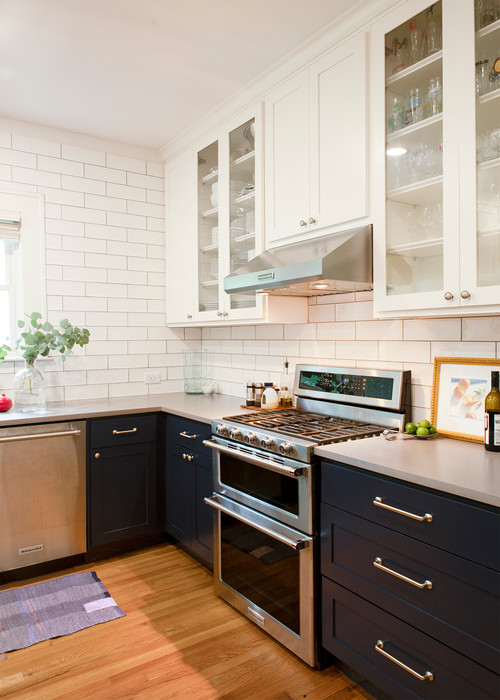
Who says your cabinets have to be painted all the same shade? Don’t be afraid to use a two-tone color scheme, with a darker hue on the lower cabinets and a contrasting one above, say the pros.

“A deep green or blue paired with a lighter upper is a refreshing look,” says Gray-Plaisted.

2. Open up lower cabinets

Photo by SV Design

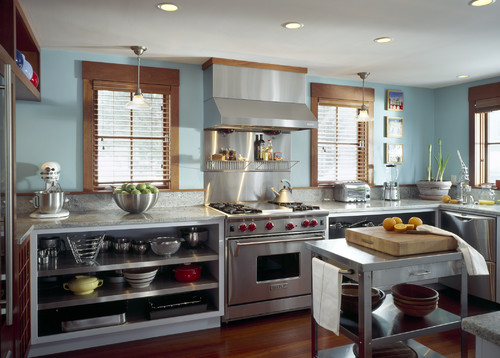
Many people flock to open shelving, or they remove their upper cabinet doors to expose their box storage. But revealing the lower cabinets is just as effective and can create an airy feeling in your kitchen.

And if you’ve ever rummaged around in a dark lower cabinet for a Bundt pan or rice cooker, you’ll save time and stress on your back with easy-access bottom cabinets.

Create theme storage by dedicating certain areas to particular needs—think baking dishes and mixing bowls in one section and egg pans and small skillets in another. (This is helpful for open shelving as well as closed cabinets!)

3. Reconsider your storage needs

Photo by Bakken Design Build 

Tastes change over time—and kids grow up and move away. Left in their wake may be storage and other cabinet solutions that don’t make sense anymore.

“Cubbies for wine or certain appliances may not be needed, so consider how you want to live right now and going forward,” says Marty Basher, an organization professional at Modular Closets.

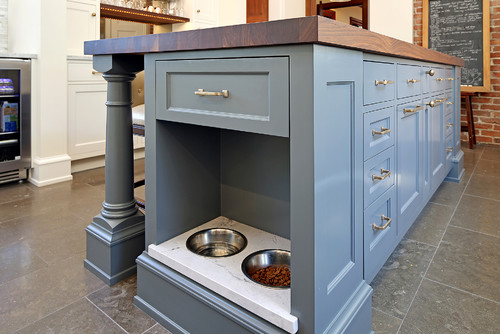
For example, that roll-up, garage door–style cabinet for the standing mixer you’ve stopped using could be replaced with a tricked-out spot for a cappuccino maker. Or the messy dog food bags that live under the sink could finally be stored properly in a pet-feeding station.

4. Skip paint—and add veneer

Photo by Cronos Design 

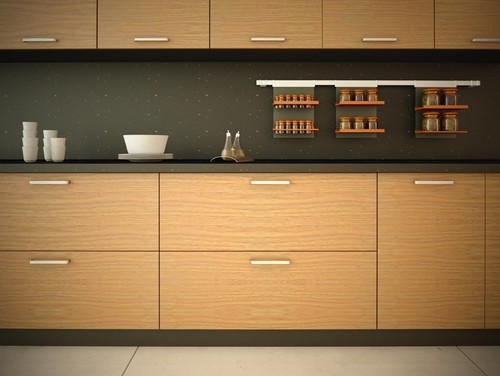
To rehab kitchen cabinets, you don’t always have to slap on new paint. You might sand and stain these areas instead. Or you could update the wood in a whole other way with new veneer.

“Veneer comes in lots of colors and styles, and it’s actually something you can DIY,” says Basher.

And even if you don’t want to completely cover your cabinets with veneer, you could use it as accent trim, he adds.

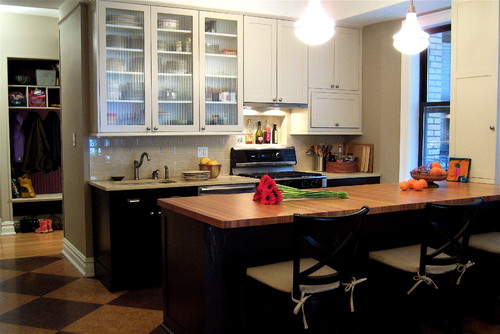
5. Pick interesting glass

Ho-hum glass-front cabinets again. Or are they? Look closer, and you’ll notice that these kitchen boxes don’t hew to the same style you see in everyone’s house. Check out the different options for this look, including fluted, wavy, or frosted panels, says Gray-Plaisted.

Bonus: With glass that obscures the insides of your cabinets, you won’t have to work as hard to stack and arrange your cups and bowls every time you empty the dishwasher.

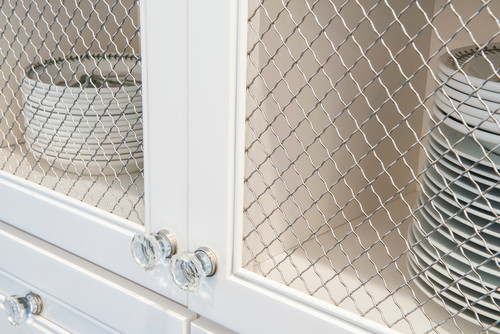
6. Try chicken wire, cork, or chalkboard cabinet faces

Photo by Case Design/Remodeling of Indianapolis

Glass isn’t the only choice when updating your kitchen cabinets. Chicken wire is an unexpected surprise on the fronts as it offers a glimpse of your pretty plates as well as infusing the whole room with a farmhouse vibe.

Or go for cork or chalkboard as inserts on cabinet faces. With handy surfaces like these, you can pin up notices, announce the evening’s dinner menu, or make a to-do list.

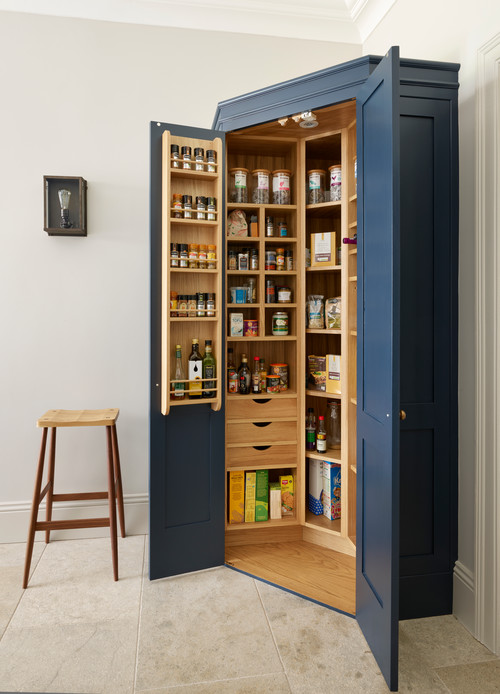
7. Consider stand-alone storage

Photo by Davonpor

Sometimes upgrading your kitchen cabinets means adding a separate piece of furniture. A free-standing pantry or larder is an ideal solution for a corner space, whether you buy one just for this purpose or rehab an old china chest or curio cabinet. And if you choose the two-tone theme mentioned previously, you might continue it by painting this item one shade on the outside and a brighter, more exciting hue within.

Thanks!

Please fill out the form below and we will be contacting you shortly
with information about your home.

Personal Info
Home Address
Message