
September in Southern California may still feel a lot like summer. Our afternoons can stay warm, the skies can remain sunny, and flip-flop season certainly isn’t over yet.
But this transition between summer and fall makes September a great time to inspect the hard surfaces around your property.
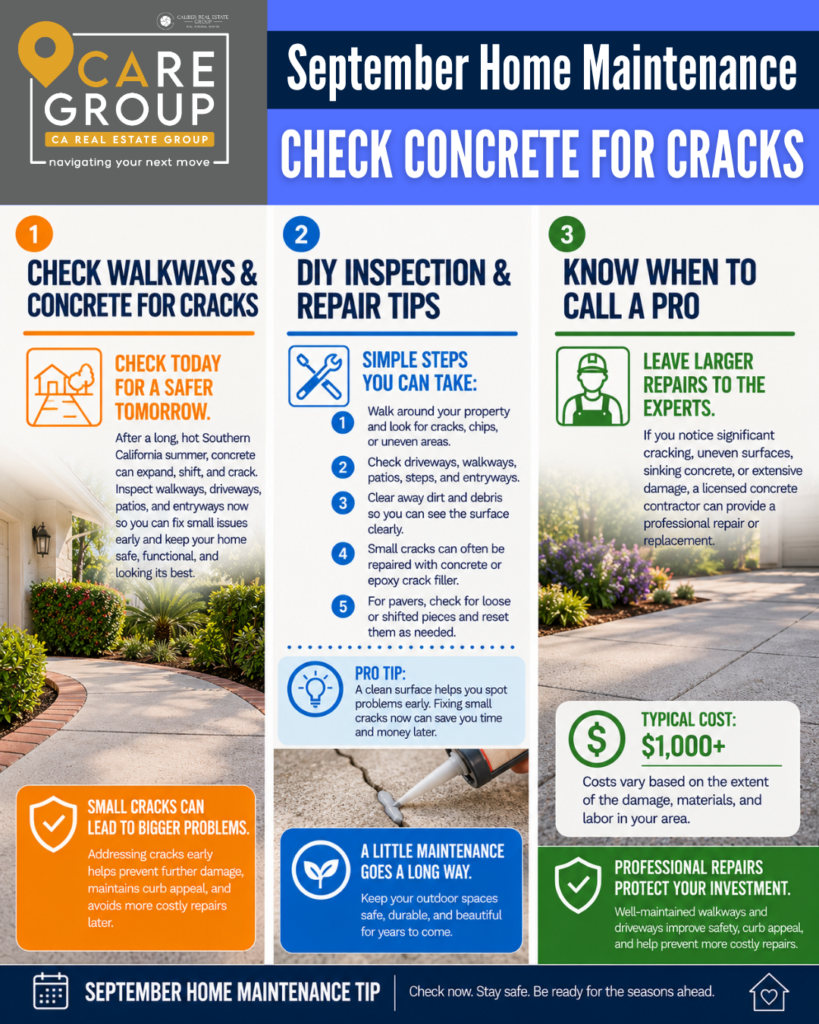
After months of heat and sun exposure, take a walk around your home and look for concrete cracks, shifting, settling, or uneven areas in your concrete and pavers.
Catching small problems now can help improve safety, maintain curb appeal, and give you time to address trouble spots before Southern California eventually moves into wetter weather.
What Concrete Areas Should You Inspect?
Don’t stop at the front walkway.
Take a complete lap around your property and check:
- Front walkways
- Driveways
- Patios
- Entryways
- Concrete steps
- Side-yard pathways
- Pool-area hardscaping
- Pavers
- Other paved areas around the home
Look closely at areas where different materials meet, around tree roots, and anywhere you’ve previously noticed movement or cracking.
What Concrete Cracks Should You Look For?
Small cracks aren’t the only issue worth noting.
Watch for:
- New cracks
- Cracks that appear to be widening
- Chipped or crumbling concrete
- Raised or sunken sections
- Uneven transitions
- Loose or shifting pavers
- Areas where water collects
- Changes around previous repairs
Pay particular attention to surfaces people regularly walk across.
A raised section of concrete or loose paver may create a trip hazard even when the underlying damage doesn’t look severe.
Why September Is a Good Time to Check for Concrete Cracks in Southern California
The original maintenance advice focuses on repairing walkways before snow and freezing temperatures arrive.
That’s obviously not our biggest concern in Cerritos, Buena Park, or most of Orange and Los Angeles counties. 😄
For Southern California homeowners, the better reason is heat, safety, drainage, and preparation for the wetter months ahead.
Extended heat, soil movement, tree roots, irrigation, age, and other factors can contribute to cracking or movement in exterior surfaces.
Inspecting now gives you an opportunity to address problems while the weather is generally still favorable for outdoor projects.
Can You Repair Small Concrete Cracks Yourself?
Some minor, nonstructural concrete cracks may be manageable as a DIY project.
Start by thoroughly cleaning the crack and surrounding surface. Dirt and loose material can prevent repair products from bonding correctly.
Then choose a concrete crack repair product designed for the size and type of crack you’re addressing.
Follow the Product Instructions
Concrete repair products aren’t interchangeable.
Some work best for narrow cracks, while others are designed for wider gaps or different applications. Preparation, application, drying, and curing requirements can also vary.
Follow the manufacturer’s directions carefully.
If you’re unsure why the concrete cracked—or whether movement is still occurring—consider getting a professional opinion before simply filling the gap.
Don’t Forget About Pavers
If your property has pavers instead of poured concrete, check them for movement, too.
Look for individual pieces that have:
- Shifted
- Sunk
- Become loose
- Raised above surrounding pavers
- Created an uneven walking surface
Sometimes a small section can be reset. More extensive movement, however, may point to a problem with the base, drainage, soil, or nearby roots.
Watch How Water Moves Around Your Hardscape
Here’s another reason to tackle this project before Southern California’s wetter months: drainage.
Look for low areas where irrigation or rainwater tends to collect.
Water that repeatedly pools near cracks, foundations, steps, or other structures deserves attention.
The crack itself may not be the only problem. You may also need to determine why water is collecting there.
When Are Concrete Cracks Serious Enough to Call a Professional?
Some cracks are better left to someone with experience.
Consider professional evaluation if you notice:
- Large or widening cracks
- Significant elevation differences
- Sinking concrete
- Multiple recurring cracks
- Extensive crumbling
- Major paver movement
- Drainage problems
- Damage near your home’s foundation
- Repairs that repeatedly fail
The original source notes that significant concrete repairs can exceed $1,000, but that shouldn’t be treated as a standard price for every repair.
Actual Southern California costs can range widely depending on whether you’re filling a crack, leveling a slab, resetting pavers, repairing drainage, replacing a section, or completing a larger demolition and replacement project.
Get a current local estimate for the specific problem you’re addressing.
Final Thoughts
Southern California may not have snow-covered sidewalks to worry about, but our walkways, driveways, patios, and entryways still deserve attention.
September is a perfect time to walk your property and look for cracks, uneven surfaces, loose pavers, and drainage concerns.
Small maintenance issues are generally easier to address when you catch them early.
And with wetter weather eventually ahead, now is a good time to make sure the surfaces around your home are safe, functional, and ready for the season to come.
Check your concrete now—before the rainy season.
Frequently Asked Questions
Why should I check my concrete for cracks in September?
September’s generally warm Southern California weather provides an opportunity to inspect and address outdoor surfaces before the wetter months arrive. It can also help identify trip hazards and drainage concerns.
What areas around my home should I inspect for cracks?
Check walkways, driveways, patios, steps, entryways, side-yard paths, pool-area hardscaping, and other concrete or paved surfaces.
Can I repair a small concrete crack myself?
Some small, nonstructural cracks may be DIY-friendly. Clean and prepare the surface carefully and use a concrete repair product appropriate for the specific crack, following the manufacturer’s directions.
When is a concrete crack serious?
Large or widening cracks, sinking slabs, significant elevation changes, recurring damage, extensive crumbling, or cracking near the home’s foundation may warrant professional evaluation.
Why should I check drainage around cracked concrete?
Standing or poorly directed water can contribute to problems around hardscaping. If water repeatedly pools near damaged concrete, identifying the drainage issue may be just as important as repairing the crack.
If you’re thinking about selling and want to know how your home should be positioned in today’s market, I’d be happy to help.