
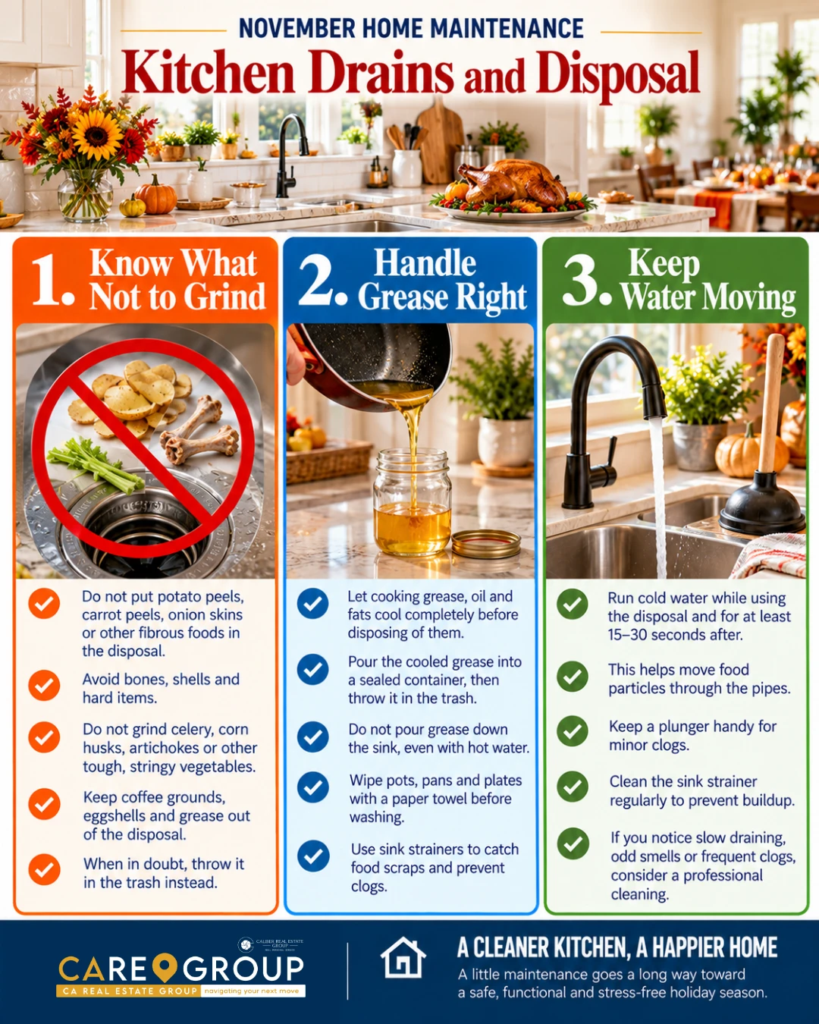
Thanksgiving is this Thursday, and your kitchen is about to work harder than it has all year. More cooking means more scraps, more grease, and more dishes, and a clogged sink or a jammed disposal is the last thing you want with a house full of guests.
A few simple habits this week can keep everything flowing.
Know What Not to Put in the Garbage Disposal
A disposal is not a trash can. Keep these out:
- Grease, fat, and oil, which cool and harden inside the pipes
- Bones and fruit pits
- Potato peels and other starchy scraps, which can turn into a thick paste
- Stringy or fibrous foods like celery, corn husks, and onion skins
- Pasta, rice, and bread, which swell with water
- Coffee grounds and eggshells in large amounts
When in doubt, scrape it into the trash or a compost bin. Our guide to what never to put down any drain has a longer list.
Handle Grease the Right Way
Let cooking grease cool, pour it into a can or jar, and put it in the trash once it hardens. Wipe greasy pans with a paper towel before washing them.
Use the Disposal Properly
- Run cold water before, during, and for a short while after you use it
- Feed scraps in a little at a time, not all at once
- Never put your hand in the disposal, and unplug it or switch off the breaker before clearing a jam
- If it hums but does not spin, turn it off and check your owner’s manual
Avoid harsh chemical drain cleaners, which can damage parts and are unsafe to splash. If a drain is slow, try a plunger first.
Check the Dishwasher and the Sink Drain
Clean the dishwasher filter if yours has one, then run an empty cycle if it smells or drains slowly. Look under the sink for drips, damp spots, or loose connections, and make sure you know where the shutoff valves are.
If You Ever Have a Grease Fire
Never use water on a grease fire. Turn off the heat, cover the pan with a lid, and call 911 if it spreads.
Why November Is a Good Time for Kitchen Prep in Southern California
Mild weather means we often open the windows and spend time outdoors, but the kitchen is where the holiday really happens. Checking your drains now, while it takes five minutes, beats calling a plumber on a holiday week, when appointments are harder to get.
When Should You Call a Professional?
Call a plumber if water backs up, a drain stays slow after a plunger, you hear gurgling, smell sewage, or see a leak under the sink. A licensed plumber can diagnose the problem safely.
Prices vary by home and by problem, so ask for a written estimate.
Final Thoughts
Keep grease out of the drain, be gentle with the disposal, and scrape plates into the trash. Your kitchen will thank you. For the rest of the kitchen, see our kitchen cleaning checklist and more home maintenance tips.
Frequently Asked Questions
What should I never put in a garbage disposal?
Grease, bones, potato peels, stringy or fibrous foods, pasta, rice, and bread should stay out of the disposal.
How should I get rid of cooking grease?
Let it cool, pour it into a can or jar, and put it in the trash once it hardens. Do not pour it down the drain.
What should I do if my kitchen sink is draining slowly?
Try a plunger first and avoid harsh chemical drain cleaners. If it stays slow or backs up, call a licensed plumber.
What should I do if my garbage disposal hums but does not spin?
Turn it off and check your owner’s manual. Never put your hand inside, and call a professional if it stays stuck.
If you’re thinking about selling and want to know how your home should be positioned in today’s market, I’d be happy to help.