Buena Park single-family homes sold for an average of $1,045,412 in the third quarter of 2026 (July through September), up 4.3% from $1,002,350 in Q3 2025. Homes spent an average of 25 days active in MLS, and sellers received 98.5% of their original asking price. Fewer homes sold than a year ago: 67 closings, down from 80.
Scope note: This report covers single-family detached homes in Buena Park only. Condos and townhomes move differently and have their own Q3 report.
For context, that’s about half the Orange County average. Orange County single-family homes averaged $2,090,835 in the same quarter. Buena Park homes also sold faster than the county average of 33 days.
Put simply: Buena Park prices are rising steadily, homes sell in under a month, and the city remains one of the more accessible places to own a house in Orange County.
Christine Almarines is a top real estate agent in Buena Park and Cerritos helping homeowners sell in Orange County and Los Angeles County. Here’s the plain read on Buena Park’s Q3 numbers.
What are the Q3 2026 numbers for Buena Park single-family homes?
All figures are single-family detached homes in Buena Park, California (Orange County), from the California Regional Multiple Listing Service (CRMLS), pulled October 3, 2026.
Measure
Q3 2026
Q3 2025
Change
Average sale price
$1,045,412
$1,002,350
Up 4.3%
Closed sales
67
80
Down 16%
New listings
77
84
Down 8%
Average days active in MLS
25
24
About 1 day slower
Percent of original price received
98.5%
98.1%
Up 0.4 points
How the quarter figures were built: CRMLS reports these measures month by month. Closed sales and new listings are the three months added together. Average price, days active, and percent of original price are the three monthly figures weighted by the number of homes that closed each month.
About the sample size: 67 sales in a quarter is a solid sample for a city Buena Park’s size, but a few unusual sales can still move the average. The nine-month view below helps confirm the trend.
Month by month inside Q3 2026
Month
Average sale price
Closed sales
New listings
Avg days active
% of original price
July 2026
$1,048,328
21
25
20
98.9%
August 2026
$1,033,128
20
23
35
97.2%
September 2026
$1,052,507
26
29
21
99.2%
Are Buena Park home prices going up?
Yes, steadily. The Q3 2026 average of $1,045,412 was 4.3% above Q3 2025 and about level with Q2 2026 ($1,042,042).
The nine-month view confirms it. From January through September 2026, Buena Park single-family homes averaged $1,040,850 across 190 sales, up 4.8% from $993,172 across 205 sales in the same months of 2025.
That’s a steadier climb than the Orange County average (up 11.2% year over year in Q3), which is pulled around by high-end coastal sales. Buena Park’s gains look more like a typical home gaining value.
As always, an average describes the mix of homes that sold. Your home’s value comes from your own street and recent comparable sales.
How fast are Buena Park homes selling?
Buena Park single-family homes averaged 25 days active in MLS in Q3 2026, about the same as Q3 2025 (24 days) and Q2 2026 (23 days). That’s faster than both the Orange County average (33 days) and the broader CRMLS region (39 days).
August was the outlier at 35 days. July (20 days) and September (21 days) were both quick. The slowest month in the last 21 months was December 2025, at 49 days.
Are Buena Park sellers getting their asking price?
Close to it. Sellers received 98.5% of their original asking price in Q3 2026, slightly better than 98.1% a year ago. That measure compares the final sale price to the first price the home was listed at, so it includes both negotiation and price cuts.
Spring 2026 (Q2): 99.7%. Nearly full asking.
Q3 2026: 98.5%. July 98.9%, August 97.2%, September 99.2%.
On an average-priced Buena Park home, the 1.5% gap works out to roughly $16,000. That’s an illustration using the averages, not a figure for any specific home.
Is Buena Park a buyer’s market or a seller’s market?
Balanced, leaning toward sellers:
Homes sell in under a month. 25 days on average.
Sellers get close to asking. 98.5% of original price.
Prices are rising. Up 4.3% year over year, and 4.8% for the first nine months.
But fewer homes are selling. 67 closings, down 16% from a year ago. For every 100 new listings, about 87 homes closed in Q3 2026, compared with about 95 a year earlier. Buyers had a little more to choose from.
What does this mean if you’re selling in Buena Park?
1. Plan for about a month. At 25 days on average, a well-priced Buena Park home typically has an accepted offer within the first few weeks.
2. Price right at the start. Homes priced right from day one sold close to asking. The ones that sat pulled the average down to 98.5%.
3. Don’t price off the county average. At $2,090,835, the Orange County average includes coastal estates that have nothing to do with your home. Buena Park comps are what matter.
4. Watch the winter slowdown. December 2025 averaged 49 days, the slowest month in the data. If you’re ready, list this fall.
What does this mean if you’re buying in Buena Park?
1. Buena Park is one of the more accessible ways into an Orange County house. At about half the county average, it’s worth a close look if you’ve been priced out elsewhere.
2. Expect to pay close to asking. 98.5% means modest room to negotiate, more on homes that have been sitting.
3. Watch homes past 25 days. That’s the Buena Park average. A home well past it is where sellers tend to be more flexible.
4. Don’t wait for prices to fall. Prices are up 4.3% year over year, and nothing in the data points down.
Common mistakes in Buena Park right now
Comparing Buena Park to Orange County headlines. County-wide numbers are pulled by much more expensive markets.
Pricing high “to leave room.” Buyers negotiate either way, and an overpriced home sits.
Assuming fewer sales means lower prices. Sales fell 16%, but prices rose 4.3%.
Reading one slow month as a trend. August’s 35 days was followed by 21 in September.
FAQ
What was the average home price in Buena Park in Q3 2026?
$1,045,412 for single-family detached homes, up 4.3% from $1,002,350 in Q3 2025 (CRMLS).
How fast do homes sell in Buena Park?
25 days active in MLS on average in Q3 2026, compared with 33 days for Orange County overall.
Do Buena Park homes sell for asking price?
Close to it. Sellers received 98.5% of their original asking price on average in Q3 2026.
How many homes sold in Buena Park in Q3 2026?
67 single-family homes closed from July through September 2026, down from 80 in Q3 2025.
How does Buena Park compare to the rest of Orange County?
Buena Park single-family homes averaged $1,045,412 in Q3 2026, about half the Orange County average of $2,090,835, and sold faster (25 days against 33).
Does this include Buena Park condos and townhomes?
No. This covers single-family detached homes only. Condos and townhomes have their own Q3 2026 report.
Christine Almarines is a top real estate agent in Buena Park and Cerritos helping homeowners sell in Orange County and Los Angeles County.
The short answer
Cerritos single-family homes sold for an average of $1,221,457 in the third quarter of 2026 (July through September), about the same as Q3 2025 ($1,211,063, up 0.9%). Homes sold fast, in an average of 17 days, eight days faster than a year ago. Sellers received 99.7% of their original asking price.
Scope note: This report covers single-family detached homes in Cerritos only. Condos and townhomes move differently and have their own Q3 report.
The bigger change happened inside 2026. In Q2, Cerritos sellers got 101.7% of their original price, meaning many homes sold over asking. In Q3, that slipped just under 100%. At the same time, 76 homes came on the market, up 41% from 54 a year ago.
Put simply: Cerritos is still one of the fastest markets in Southern California, but buyers have more choices than they did in the spring, and over-asking offers are no longer the norm.
Christine Almarines is a top real estate agent in Buena Park and Cerritos helping homeowners sell in Orange County and Los Angeles County. Here’s the plain read on what Cerritos’s Q3 numbers say.
What are the Q3 2026 numbers for Cerritos single-family homes?
All figures are single-family detached homes in Cerritos, California (Los Angeles County), from the California Regional Multiple Listing Service (CRMLS), pulled October 3, 2026.
Measure
Q3 2026
Q3 2025
Change
Average sale price
$1,221,457
$1,211,063
Up 0.9%
Closed sales
59
50
Up 18%
New listings
76
54
Up 41%
Average days active in MLS
17
25
8 days faster
Percent of original price received
99.7%
100.6%
Down 0.9 points
How the quarter figures were built: CRMLS reports these measures month by month. Closed sales and new listings are the three months added together. Average price, days active, and percent of original price are the three monthly figures weighted by the number of homes that closed each month.
About the sample size: Cerritos is a smaller city, so 59 sales in a quarter is a solid but not huge sample. A few unusually high or low sales can move the average price. Days on market and percent of asking price are steadier signals here.
Month by month inside Q3 2026
Month
Average sale price
Closed sales
New listings
Avg days active
% of original price
July 2026
$1,269,579
20
30
16
99.3%
August 2026
$1,240,284
19
21
18
100.8%
September 2026
$1,155,450
20
25
17
99.2%
Are Cerritos home prices going up or down?
Flat year over year, down from the spring. The Q3 2026 average of $1,221,457 was 0.9% above Q3 2025, but 6.1% below Q2 2026 ($1,300,152). The monthly average eased each month of the quarter, from $1,269,579 in July to $1,155,450 in September.
For a longer view, look at the first nine months of the year. From January through September 2026, Cerritos single-family homes averaged $1,256,515 across 149 sales, about 2.8% above the same nine months of 2025 ($1,222,607 across 140 sales).
An average describes the mix of homes that sold, not what any one home is worth. A September with more smaller homes closing will show a lower average even if values on your street held. Your number comes from your own comparable sales.
How fast are Cerritos homes selling?
Very fast. Cerritos single-family homes averaged 17 days active in MLS in Q3 2026, down from 25 days in Q3 2025. Across the broader CRMLS region, single-family homes averaged 39 days in the same quarter. Cerritos homes sold in well under half that time.
Every month of Q3 stayed between 16 and 18 days. The slowest stretch in the last 21 months was January 2026, at 43 days. That’s the winter pattern to plan around.
Are Cerritos sellers still getting over asking?
Not on average, not anymore. Sellers received 99.7% of their original asking price in Q3 2026. That measure compares the final sale price to the first price the home was listed at, so it includes both negotiation and any price cuts.
Here’s how that has moved:
Q2 2026: 101.7%. Many homes sold over their original price. May 2026 averaged 103.3%.
Q3 2026: 99.7%. July 99.3%, August 100.8%, September 99.2%.
Q3 2025: 100.6%.
On an average-priced home, 99.7% is within about $3,000 of the original price. That’s still an extremely strong result for sellers. But a buyer in September 2026 was negotiating a little, where a buyer in May was competing.
Is Cerritos a seller’s market right now?
Still a seller’s market, but a less extreme one than in the spring:
Homes sell in 17 days. That’s fast by any measure.
Sellers get nearly full asking price. 99.7% on average.
But more homes are for sale. New listings were up 41% from a year ago. For every 100 new listings, about 78 homes closed in Q3 2026, compared with about 93 in Q3 2025. Buyers have more to choose from.
The shift is from bidding wars to well-priced homes selling quickly near asking.
What does this mean if you’re selling in Cerritos?
1. Price at the market, not above it. In the spring, over-asking offers covered pricing mistakes. In Q3, with 41% more listings, buyers compare. A home priced right still sells in about two and a half weeks.
2. Expect a fast sale if you’re ready. At 17 days on average, plan for an accepted offer within the first few weeks. Have your next move lined up.
3. Stand out from the extra listings. With more homes on the market, condition and presentation matter more than they did in the spring.
4. List before winter if you can. January 2026 averaged 43 days and 96.6% of original price, the slowest month in the data.
What does this mean if you’re buying in Cerritos?
1. You have more choices than in the spring. 76 new listings in Q3, up from 54 a year ago.
2. Don’t expect a discount. Homes still sell for 99.7% of original asking on average. Offers well below asking on a fresh listing will usually lose.
3. Be ready to move in days. 17 days on market means the right home won’t wait for a second weekend.
4. The over-asking pressure has eased. You may not need to bid above the price the way buyers did in the spring. Let the comparable sales guide your number.
Common mistakes in Cerritos right now
Pricing off a spring sale. Spring homes sold above asking. Q3 homes didn’t.
Reading regional headlines. The broader region averaged 39 days on market. Cerritos averaged 17. Regional coverage will make buyers think they have more time than they do.
Assuming more listings means lower prices. Year-to-date prices are up about 2.8%. More inventory means more choice, not a falling market.
Treating the average price as your price. $1,221,457 covers every single-family sale in the city.
FAQ
What was the average home price in Cerritos in Q3 2026?
$1,221,457 for single-family detached homes, up 0.9% from $1,211,063 in Q3 2025 (CRMLS).
How fast do homes sell in Cerritos?
Single-family homes averaged 17 days active in MLS in Q3 2026, compared with 39 days across the broader CRMLS region.
Do Cerritos homes sell over asking?
In Q2 2026, sellers averaged 101.7% of original asking price. In Q3 2026, that dropped to 99.7%, just under asking.
How many homes sold in Cerritos in Q3 2026?
59 single-family homes closed from July through September 2026, up from 50 in Q3 2025.
Are more homes for sale in Cerritos?
Yes. 76 single-family homes were newly listed in Q3 2026, up 41% from 54 in Q3 2025.
Does this include Cerritos condos and townhomes?
No. This report covers single-family detached homes only. Condos and townhomes have their own Q3 2026 report.
Christine Almarines is a top real estate agent in Buena Park and Cerritos helping homeowners sell in Orange County and Los Angeles County.
The first thing guests see at the holidays is your front yard and entry. October is a great time to give them a little love, and a few simple updates can go a long way.
In Southern California, fall is also a good time to garden. Once the heat eases, many plants settle in better than they do in the stress of summer. Just wait for a cooler stretch before planting, and follow your city’s watering rules.
Plant Some Fall Color
Planters by the front door are one of the quickest ways to make a home feel welcoming. Cool-season flowers that are commonly used in Southern California include:
Pansies and violas
Snapdragons
Cyclamen
Ornamental kale
Pick a few for pots by the entry or along the walkway. Check with your local nursery to see what does best in your area.
Try a Little Fall Vegetable Gardening
Fall is also the time to start cool-season vegetables in Southern California (see our fall vegetable garden guide). Ask your nursery about lettuce, kale, spinach, carrots, and peas. Even a few pots on the patio give you something fresh to harvest for holiday meals.
Water new plants regularly while they get established, and follow your local watering guidelines.
Freshen Up the Front Entry
A few small updates make a big first impression.
Wash the front door and touch up the paint if it is chipped or faded
Clean the house numbers, and replace them if they are hard to read
Wipe down light fixtures and replace burnt-out bulbs
Swap in a fresh doormat
Hang a wreath or add a few pumpkins that match your style
Tidy the Yard
Trim back overgrown shrubs and pull dead plants (our guide to pruning dead wood shows how). Edge the lawn and walkway, and sweep away debris. A tidy yard makes everything else look better.
Check the Walkway and Porch Light
Make sure the path to your front door is clear and well lit. This helps your guests find their way after dark.
Why October Is a Good Time to Refresh Your Curb Appeal
Even though Southern California afternoons can stay warm well into October, mornings and evenings are usually more comfortable for outdoor projects. New plants also have time to settle in before the cooler months, and your front entry will be ready well before holiday guests arrive.
A few small updates now also mean you are not rushing the week before Thanksgiving.
When Should You Call a Professional?
Call a landscaper if you have large trees to trim, drainage problems, or a big redesign in mind. Call an electrician for any outdoor wiring or fixture problems.
Prices vary, so ask for a written estimate.
Final Thoughts
You do not need a big project to boost your curb appeal. A few pots of fall color, a clean front door, and a tidy yard can make your home look welcoming for the holidays. For more ideas, read Spruce Up Your Curb Appeal or browse our home maintenance tips. Thinking of selling in the new year? Curb appeal matters to buyers, so see how to prepare your home to sell for top dollar.
Frequently Asked Questions
What are easy ways to improve curb appeal in the fall?
Add planters with cool-season flowers, wash and refresh the front door, clean light fixtures and house numbers, and tidy the yard and walkway.
What can I plant in Southern California in the fall?
Cool-season flowers like pansies, violas, snapdragons, and cyclamen, and cool-season vegetables like lettuce, kale, spinach, carrots, and peas. Ask your local nursery what does best in your area.
When should I plant in the fall if it is still hot?
Wait for a cooler stretch before planting, and water new plants regularly while they get established.
When should I call a professional?
Call a landscaper for large trees, drainage problems, or major redesigns, and an electrician for outdoor wiring or fixture problems.
If you’re thinking about selling and want to know how your home should be positioned in today’s market, I’d be happy to help.
Christine Almarines is a top real estate agent in Buena Park and Cerritos helping homeowners sell in Orange County and Los Angeles County.
Quick answer: rate buydown vs. price cut, which one helps you sell?
A seller-paid rate buydown is money you put toward lowering the buyer’s mortgage rate instead of taking it off your sale price. The dollars go to the lender at closing, the lender uses them to buy down the buyer’s interest rate, and the buyer’s monthly payment drops for some or all of the loan.
Same dollars leaving your side of the closing statement as a price cut. Different place they land, and a different effect on whether the buyer can actually say yes.
Is a Rate Buydown Better Than Lowering My Price?
Depends what’s actually stopping the buyer. If they’ve decided the house isn’t worth what you’re asking, a price cut is the honest move and no buydown fixes that.
But most rate-hesitant buyers right now aren’t questioning the house. They’re doing math on the monthly payment and getting nervous. That’s a rate problem, not a price problem. And a rate buydown vs. price cut comparison comes down dollar for dollar in the buydown’s favor when the objection is payment, not price.
Here’s the plain version of why. You date your interest rate. You marry the purchase price. A buyer sitting across the table from that same truth isn’t afraid of your price. They’re afraid of what their rate does to their payment every month for years. Speak to the actual fear, and you’ll move them faster than shaving a number they weren’t objecting to in the first place.
Rate Buydown vs. Price Cut: How Much Does a Buydown Actually Cost Me?
As an illustrative example, on a $600,000 loan, roughly 1 point (1% of the loan amount, so about $6,000) buys the rate down by somewhere in the ballpark of a quarter to a half a percentage point, depending on the lender and the day. That knocks a real chunk off the buyer’s monthly payment for the life of the loan, or for however many years you structure the buydown to last.
Compare that to a $6,000 price cut on the same $600,000 home. That barely moves the buyer’s monthly payment at all, maybe $30 to $40 a month, because it’s spread across 30 years of a mortgage instead of hitting the rate directly. The buyer barely feels a $6,000 price cut. They feel a rate buydown every single month.
Same $6,000 out of your net. Very different amount of relief landing on the one thing that’s actually making them hesitate. Your lender or the buyer’s lender can run the exact numbers for any specific loan amount and rate — this is the shape of the math, not a quote for your home.
Temporary Buydown vs. Permanent Buydown: What’s the Difference?
A temporary buydown (often called a 2-1 or 1-0 buydown) lowers the rate for the first year or two, then steps back up to the note rate. It’s cheaper for you to fund and it’s built for exactly this moment — buyers who expect rates to ease and plan to refinance anyway. It buys them breathing room right when the payment feels hardest, the first year in a new house.
A permanent buydown lowers the rate for the life of the loan. It costs more upfront and makes sense for a buyer who isn’t counting on refinancing, or who wants the lower payment locked in no matter what rates do later. In the rate buydown vs. price cut decision, this is the version that costs the seller the most upfront.
For most rate-hesitant buyers in this market, the temporary buydown does the job. It gets them in the door now, at today’s price, with a payment that doesn’t spike right when they’re least ready for it.
Rate Buydown vs. Price Cut: When Does Each One Make Sense?
A buydown makes sense when:
Buyers are touring, sometimes even offering, then going quiet after they run their own numbers
Your home is priced right for the comps, so the objection isn’t the price
You’d rather solve the buyer’s actual hesitation than chip away at your equity for something that isn’t the real issue
A price cut still makes sense when:
The home has sat long enough that buyers assume something’s wrong with it
Feedback keeps coming back that the price itself, not the payment, is the sticking point
Comps have shifted since you listed and your number is genuinely out of line now
You don’t have to guess which one you’re dealing with. Showings with no offers usually means price. Offers that fall apart or buyers who go quiet after “let me run the numbers” usually means payment shock, and that’s a rate buydown vs. price cut decision worth having with your agent before you touch either lever.
Rate Buydown vs. Price Cut: FAQ
What is a seller-paid rate buydown?
Money the seller puts toward lowering the buyer’s mortgage rate at closing, instead of reducing the sale price. It lowers the buyer’s monthly payment directly rather than spreading a small discount across 30 years.
Is a rate buydown better than a price cut?
It depends on the buyer’s actual objection. If they think the house is overpriced, a price cut is the honest fix. If they’re nervous about the monthly payment on an otherwise fairly priced home, a buydown solves that more directly.
How much does a rate buydown cost a seller?
As an illustrative example, on a $600,000 loan, roughly $6,000 (1 point) buys the rate down about a quarter to a half a percentage point, meaningfully lowering the buyer’s payment for as long as the buydown lasts.
What’s the difference between a temporary and permanent rate buydown?
A temporary buydown lowers the rate for the first year or two before stepping back up, and costs less to fund. A permanent buydown lowers the rate for the life of the loan and costs more upfront.
How do I know if I need a buydown or a price cut?
Showings with no offers usually points to price. Offers that stall or buyers who go quiet after running their own numbers usually points to payment shock, which is a buydown conversation.
Who should I talk to about pricing strategy in this rate environment?
Christine Almarines is a Realtor® and certified Pricing Strategy Advisor (PSA) with CA Real Estate Group, working sellers across Cerritos, Buena Park, and the surrounding Orange County and Los Angeles County communities.
Christine Almarines is a top real estate agent in Buena Park and Cerritos helping homeowners sell in Orange County and Los Angeles County.
October 2026 Movie Guide
Family-Friendly Halloween Movies to Watch in October 2026
Friendly ghosts, silly witches, animated monsters, or just enough spooky to feel like Halloween. Here is what is airing on Freeform, what is streaming on Disney+, Peacock, Paramount+ and Netflix, and 17 family favorites sorted by scare level. Made for Orange County and Los Angeles County families. All TV times are Pacific.
—days until Halloween
Not sure what to watch?
Choose who is on the couch, then tap the button. Movies you have already checked off get skipped first.
0 of 17 watched this October
Freeform, Pacific Time31 Nights of Halloween on TV
Freeform’s yearly lineup is back with Hocus Pocus, Casper, The Nightmare Before Christmas, Monsters, Inc., Scooby-Doo, Ghostbusters and more. This is the family-friendly part of the schedule, in Southern California time. See Freeform’s official schedule.
Some titles toward the bottom of the schedule, like Ghostbusters, The Addams Family, Cruella (2021) and Haunted Mansion (2023), may be better for older children. Check ratings and your child’s comfort level. All programming is subject to change. Confirm with your TV provider before movie night.
Turn on JavaScript to see the day-by-day schedule, or open Freeform’s official schedule above.
No schedule neededWhat’s Streaming
Prefer to skip the TV guide? Pick a service. Streaming lists change, so check the app before movie night.
Short on timeEasy Picks by Age
Don’t want to sort through the whole list? Start here.
Younger kids
Spookley, the Square Pumpkin
Toy Story of TERROR!
Monsters, Inc.
Monster High: The Movie
A Really Haunted Loud House
Sing: Thriller
Spidey and the Avengers: Halloween Team-Up!
Elementary age, mild spooky fun
Halloweentown
Casper
Hocus Pocus
The Haunted Mansion (2003)
The Nightmare Before Christmas
Muppets Haunted Mansion
Hotel Transylvania and Hotel Transylvania 2
The Book of Life
Twitches
Older kids and teens
Ghostbusters, Afterlife and Frozen Empire
Coraline
Haunted Mansion (2023)
The Addams Family (1991) and Addams Family Values (1993), both live action and PG-13
The School for Good and Evil
We Have a Ghost
Wendell & Wild
Ratings are only a starting point. Some kids love ghosts and monsters, and others find even cartoon scares unsettling. You know your kids best.
17 picks with tidbitsFamily Favorites by Scare Level
Check them off as you go. The green tag shows where it is airing or streaming right now, based on the lists above.
Scare level 1 of 3Little Ghouls
Ages 3 to 6. Silly, sweet, and short on jump scares. Two of these are under half an hour, which is a good bedtime-friendly start.
It’s the Great Pumpkin, Charlie Brown
1966TV specialAbout 25 min
Linus waits all night in the pumpkin patch while the rest of the gang goes trick-or-treating. Gentle, funny, and over before anyone gets sleepy.
Tidbit
It first aired on TV in 1966 and has come back every October since. Charlie Brown getting a rock in his trick-or-treat bag is the line most families still quote.
A kind witch keeps making room on her broom for new animal friends, until a hungry dragon shows up. Rhymes the whole way through.
Tidbit
It comes from the picture book by Julia Donaldson and Axel Scheffler, the same pair behind The Gruffalo. Read the book first and let your kid spot what changed.
Ages 6 and up. A little spooky, a lot of fun, and the ones most families end up rewatching every year.
Hocus Pocus
1993PG
Three witch sisters come back to Salem on Halloween night, and three kids and a talking cat have until sunrise to stop them. The one everybody asks for first.
Tidbit
It did poorly in theaters in 1993. Years of TV airings turned it into a Halloween tradition, and a sequel finally followed in 2022.
Three kids are sure the house across the street is alive. They are right. A fun pick for anyone who has ever looked at a house a little too long.
Tidbit
It was made with motion capture, where real actors’ movements are recorded and turned into animation. Steven Spielberg and Robert Zemeckis were executive producers.
A boy brings his beloved dog back to life, and his classmates try the same trick with worse results. Black and white, with a big heart. Be ready for a sad opening.
Tidbit
Tim Burton first made Frankenweenie as a short film in 1984. This feature is his stop-motion remake.
A boy moves in with his uncle and finds out the old house, and the uncle, are full of magic and a ticking secret. Another good one for the house-loving crowd.
Tidbit
It is based on a 1973 children’s novel by John Bellairs. Jack Black and Cate Blanchett star.
Everything in this group is checked off. Clear your checklist above to start over.
Before you press playMovie Night Tips
A good movie night is mostly picking the right movie for the smallest kid in the room.
Pick for the youngest
Choose the scare level of your most sensitive kid, not your oldest.
Open the Parent guide link on the card first. It lists exactly which scenes are scary.
Watching a scary one with a younger sibling in the room? Preview it yourself first.
Make it an event
Lights low, blankets out, phones away.
Let each kid take a turn choosing the movie.
Do a double feature: one little-ghoul movie first, then the main pick.
When it gets too scary
Pause it and ask what they think will happen next. Fear shrinks when it becomes a guess.
Skip ahead, or switch to a lower scare level. Nobody has to finish a movie.
Keep one easy rewatch ready as a backup.
Simple and funMovie Night Snacks
No baking skills needed. Pair a snack with the movie and let the kids help.
Witch’s brew
Popcorn in a cauldron, or any black bowl
Green punch or limeade with gummy worms
Monster bites
Apple slices with peanut butter for “fangs” (use sunflower butter if there is a nut allergy)
Clementines with a green stem to look like mini pumpkins
Sweet and spooky
Candy from the trick-or-treat haul, one piece per movie
Banana ghosts with chocolate chip eyes
Quick answersCommon Questions
What are the best family-friendly Halloween movies?
For most families, Hocus Pocus, Hotel Transylvania, Casper, The Nightmare Before Christmas, and The Addams Family (2019) are safe, fun starting points. Little kids do best with It’s the Great Pumpkin, Charlie Brown and Room on the Broom.
What is a good Halloween movie for toddlers and preschoolers?
Try It’s the Great Pumpkin, Charlie Brown, Room on the Broom, or Wallace & Gromit: The Curse of the Were-Rabbit. They are the gentlest picks on this page.
What Halloween movies are okay for kids who scare easily?
Stick to the Little Ghouls group and read the Parent guide first. Hotel Transylvania and the Great Pumpkin special are the safest places to start.
Which ones are best for tweens?
Coraline, Monster House, ParaNorman, Goosebumps, and The House with a Clock in Its Walls have the most real chills while staying PG.
How do I find which streaming service has a movie?
Tap Where to watch on any card. It opens a search that shows the services currently carrying that title. Streaming lists change often, so check close to movie night.
What channel is Hocus Pocus on in October 2026?
Freeform is airing Hocus Pocus repeatedly throughout October 2026 as part of its 31 Nights of Halloween. It is also streaming on Disney+.
What family Halloween movies are on Freeform?
Hocus Pocus, Hocus Pocus 2, Casper, Monsters, Inc., Monsters University, Scooby-Doo, The Haunted Mansion, The Nightmare Before Christmas, Frankenweenie, Toy Story of TERROR!, Spooky Buddies and several Ghostbusters movies are in the lineup.
What family Halloween movies are streaming on Disney+?
Halloweentown, Twitches, Hocus Pocus, Hocus Pocus 2, Frankenweenie, The Nightmare Before Christmas, The Haunted Mansion, Muppets Haunted Mansion and Toy Story of TERROR!, among others.
Does Peacock have family Halloween movies?
Yes. Peacock’s 2026 family lineup includes Casper, Spookley the Square Pumpkin, The Book of Life, The Addams Family (2019) and The Addams Family 2, both animated, plus Monster Family and the Harry Potter films.
Does Paramount+ have Halloween movies for kids?
Yes. Look for A Really Haunted Loud House, Monster High: The Movie, Monster High 2, The Boy Who Cried Werewolf and Liar Liar Vampire. The live-action Addams Family (1991) and Addams Family Values (1993) are there too, rated PG-13 and better for older kids. Hotel Transylvania and Hotel Transylvania 2 arrived on October 1, 2026.
Seasonal fun from CARE GroupMore From CARE Group This Season
Three things we are doing this fall for local families.
Kids Halloween Coloring Contest
Open to K to 6 students. Three winners each get a $50 Amazon gift card. Entries are due October 23.
Enter to win one of 3 free mini photoshoot sessions at our client photoshoot on Saturday, November 7, 2026, 8 AM to 12 PM, at Heritage Park in Santa Fe Springs. Entries close Friday, October 23.
Christine Almarines is a top real estate agent in Buena Park and Cerritos helping homeowners sell in Orange County and Los Angeles County.
Pop some popcorn, turn off the lights, pile up the blankets and let everyone take turns choosing. If you live in Orange County or Los Angeles County, bookmark this page. We will keep sharing seasonal things to do, local events and family activities all year. Happy Halloween.
Schedule and streaming information come from Freeform, Disney+, Peacock, Paramount+ and Netflix’s own published Halloween guides, as of October 2026. All programming is subject to change. Ratings and streaming availability change too. Use the Parent guide and Where to watch links on each card to confirm before movie night. Movie titles belong to their owners and are mentioned for guidance only. This page is not affiliated with any studio or service.
Verified against official sources as of publication. Event details can change — confirm before you plan around any one item.
Cerritos has a full month ahead: city programs, a packed concert calendar at the Cerritos Center for the Performing Arts, a month-long pumpkin patch at Los Cerritos Center, and the weekly farmers market that runs all year. Here’s what’s actually on the calendar for things to do in Cerritos this October, pulled directly from official sources.
Things to Do in Cerritos: City Events
Senior Health and Wellness Fair — Friday, October 2, 2026
Tees and Tacos Tournament — Friday, October 9, 2026, at Iron-Wood Nine Golf Course
Neither listing included a specific time on the city’s site. Call the city at (562) 860-0311 to confirm before you plan around either one.
Cerritos Farmers Market (Every Saturday, All Year)
Farm-fresh produce every Saturday, 8:00 a.m. to noon, rain or shine, at Cerritos Towne Center in the northwest parking lot of the Cerritos Center for the Performing Arts. Closed on major holidays only.
Fallstivities Pumpkin Patch at Los Cerritos Center
Running October 1 through October 31, 2026, at Los Cerritos Center (239 Los Cerritos Center, Cerritos, CA 90703). A full month of fall activities at the mall. Specific daily hours weren’t listed on the mall’s event page — call (562) 402-7467 to confirm before you go.
Seeds of Resilience: Barrio Americano at Rancho Los Cerritos
This exhibition runs throughout October during regular public hours at the historic Rancho Los Cerritos site. Public hours in early October were listed as 1:00 to 5:00 p.m. on weekdays and 10:00 a.m. to 5:00 p.m. on weekends — check rancholoscerritos.org for the exact schedule the week you plan to visit, since museum hours can shift.
Cerritos Center for the Performing Arts: October Highlights
The CCPA has one of its fullest calendars of the year this October. A few highlights, all confirmed directly from the venue’s own events calendar:
Thu, Oct 1, 7:30 PM: Hairball
Fri, Oct 2, 8:00 PM: Spyro Gyra with Special Guest Special EFX
Fri, Oct 9, 8:00 PM: Killer Queen, A Tribute to Queen
Sun, Oct 11, 7:00 PM: Al Jardine of The Beach Boys with the Pet Sounds Band
Mon, Oct 12, 7:00 PM: The Terminator Live
Thu, Oct 15, 8:00 PM: Vienna Royal Orchestra: Viva Mozart 270
Sat, Oct 24, 11:00 AM and 2:00 PM: Dog Man The Musical (two showtimes, a good one for families)
Sun, Oct 25, 7:00 PM: Clay Aiken
Tue, Oct 27, 7:30 PM: Jim Henson’s Labyrinth in Concert
Sat, Oct 31, 7:00 PM: TUSK, The Classic Fleetwood Mac Tribute
This isn’t the full lineup of things to do in Cerritos this month — the CCPA has shows nearly every night. See the complete, up-to-date schedule and buy tickets at ccpa.cerritos.gov.
Halloween Boo-Nanza at Cerritos Towne Center
Saturday, October 24, 11:00 a.m. to 1:00 p.m., in the Regal Edwards Courtyard at Cerritos Towne Center, 12731 Towne Center Drive, Cerritos, CA 90703. Free admission, free on-site parking.
This is a family event — trick-or-treat candy stations, character meet-and-greets, face painting, balloon twisting, kids’ crafts, and a live DJ. Costumes are encouraged, and organizers recommend arriving early. Hosted by Cerritos Towne Center (@shopcerritos), confirmed on their Eventbrite listing and Instagram announcement.
Halloween in Cerritos
The city typically partners with Los Cerritos Center on a community Halloween Festival late in the month — past years have run costume parades, entertainment, game booths, rides, and food trucks. I could not confirm an exact 2026 date and time from official sources as of this writing, so check the City of Cerritos community events page or call the Recreation Services Division at (562) 916-1254 for the confirmed date before you plan your night around it.
Staying in for a family movie night instead? Our Halloween Movie Calendar lists what is airing on Freeform, what is streaming, and 17 family-friendly picks sorted by scare level.
Things to Do in Cerritos This October: FAQ
Is the Cerritos Farmers Market open every week in October?
Yes, every Saturday, 8:00 a.m. to noon, at Cerritos Towne Center.
Do I need tickets for CCPA shows?
Yes, tickets are sold through the CCPA box office and website directly. Call (562) 916-8510 or visit ccpa.cerritos.gov.
Is the pumpkin patch at Los Cerritos Center free to visit?
The mall’s event listing didn’t specify a cost. Call (562) 402-7467 to confirm before you go.
When is the Cerritos Halloween Festival this year?
Not confirmed as of this writing. Check the city’s community events page or call (562) 916-1254 closer to the date.
Is the Halloween Boo-Nanza free?
Yes, free admission and free parking, Saturday, October 24, 11:00 a.m. to 1:00 p.m. at Cerritos Towne Center.
More Things to Do in Cerritos, and Life Beyond October
Christine Almarines is a top real estate agent in Buena Park and Cerritos helping homeowners sell in Orange County and Los Angeles County.
Quick answer: what kind of buyer should actually consider a fixer-upper?
Not every buyer, and that’s fine to say plainly. Buying a fixer-upper takes a specific combination: extra cash on hand beyond your down payment, the tenacity to get through a full remodel without losing steam halfway, and financing that can actually support the project, not just the purchase.
If any one of those three is missing, a fixer-upper usually creates more stress than it’s worth. If you have all three, it can be one of the smartest moves available to you right now.
Is Buying a Fixer-Upper Actually Cheaper?
Here’s the math that makes it worth considering. You’re buying well below market value going in. If the remodel is done right, by the time you’re finished, you typically land at or around market value for the neighborhood, sometimes better.
There’s a real benefit here beyond the numbers too. You’re not buying a home already sitting at the top of the market and then feeling pressure to customize it anyway. You’re building something that’s actually yours from the start — the layout, the finishes, the choices, made by you instead of inherited from whoever owned it before.
What Are the Real Costs of Buying a Fixer-Upper?
The money you put into the remodel is real and it’s significant. You’re funding the renovation on top of the purchase, and unlike a move-in-ready home, you don’t get to spread that cost out slowly. It happens during the project.
Budget for surprises too, not as an afterthought, as a real line item. Older homes hide things — plumbing, electrical, structural issues that don’t show up until walls come down. The buyers who go into a remodel with a cushion for the unknown are the ones who finish it calm. The ones who budget to the dollar for exactly what they expect are the ones who end up stressed and cutting corners halfway through.
Can You Get Some of Your Fixer-Upper Money Back?
Yes, and this is the part most buyers don’t think through before they start. Once the remodel is done and the home’s value has gone up, you can refinance and cash out part, or sometimes all, of what you spent rebuilding the property. That puts real money back in your pocket if the project left you tighter on cash than you expected.
What’s the Catch With a Cash-Out Refinance?
Your monthly payment goes up. That’s the real cost of getting cash back out of the home, and it’s worth sitting with before you assume a cash-out refinance is a free win. You’re not creating money, you’re borrowing against the value you just built, and that borrowing shows up in your payment every month going forward.
This is exactly where the numbers get specific to you — your remodel budget, your new home value, your loan terms — and it’s not something to guess at with a generic online calculator.
Why Does It Matter Who You Work With on a Fixer-Upper?
Because this isn’t a typical purchase, and most agents haven’t actually done what you’re about to do. I’ve personally invested in, flipped, and renovated property, and I’ve represented investors making these exact decisions. I know how to look at your numbers and tell you plainly what a project like this can realistically return, not just what it might in a best-case scenario.
Working alongside one of my preferred lenders, we can walk through what your specific remodel, your specific loan, and your specific cash-out plan actually looks like on paper before you commit to any of it.
A buyer with extra cash beyond the down payment, the tenacity to get through a full remodel, and financing that supports the project itself, not just the purchase. Missing any one of the three usually creates more stress than it’s worth.
Is buying a fixer-upper actually cheaper?
Often, yes. You buy below market value going in, and a well-done remodel typically lands you at or around neighborhood market value by the time you’re finished, sometimes better.
What are the real costs of buying a fixer-upper?
The remodel cost itself, funded on top of the purchase without the ability to spread it out slowly, plus a real budget line for surprises like hidden plumbing, electrical, or structural issues in older homes.
Can I get remodel money back after buying a fixer-upper?
Yes, through a cash-out refinance once the home’s value has increased. The tradeoff is a higher monthly payment, since you’re borrowing against the value you built rather than creating new money.
Why does it matter who represents me when buying a fixer-upper?
Most agents haven’t personally invested in, flipped, or renovated property. Working with someone who has, alongside a lender experienced with renovation financing, means realistic numbers instead of best-case guesses.
Who should I talk to about buying a fixer-upper in Cerritos or Buena Park?
Christine Almarines is a Realtor® with CA Real Estate Group, working buyers across Cerritos, Buena Park, and the surrounding Orange County and Los Angeles County communities.
What Should You Do Next?
This is a highly customized decision, and a generic answer won’t serve you here. A buyer consultation is the right next step, so we can look at your actual numbers and figure out whether a fixer-upper makes sense for your situation. Start with the free First-Time Home Buyer Course to see the full process, then let’s talk specifics.
Christine Almarines is a top real estate agent in Buena Park and Cerritos helping homeowners sell in Orange County and Los Angeles County.
Quick answer: what should you do with a fixer-upper before selling?
Selling a fixer-upper comes down to three real paths, and none of them is automatically the right one. Sell it as-is, do minor repairs, or fully remodel. Each one trades time and cash for a different outcome, and the right choice depends on your timeline, your goals, and how much of either you actually have to give right now.
Should You Sell a Fixer-Upper As-Is?
You can, and for a lot of sellers in Cerritos, Buena Park, and across LA and Orange County, this is the right call, especially when time matters more than squeezing out every dollar.
Here’s the move that makes selling a fixer-upper as-is actually work in your favor: get a pre-sale inspection before you list. Once you have that report, you hand it to interested buyers before they write an offer, not after. They walk in already knowing what they’re getting.
That single step changes the whole negotiation. A buyer who’s already seen the inspection report has already priced the condition of the house into their offer. They’re far less likely to come back during escrow asking for credits, a price reduction, or canceling outright over something they should have known walking in. You’re not hiding anything, and that’s exactly why it works. Buyers trust a seller who shows them the report before they ask for it.
Is It Worth Doing Minor Repairs Before You Sell a Fixer-Upper?
For some sellers, yes. Minor repairs — fixing the obvious stuff that scares buyers off without touching the whole house — can get you a noticeably better offer than selling fully as-is.
The tradeoff is real. Minor repairs cost you time and cash up front, and you’re doing that work before you know for certain it pays off. This path fits sellers who have a little runway before they need to close, and who’d rather spend a few thousand dollars now than leave it on the table in the final sale price.
Should You Fully Remodel a Fixer-Upper Before Selling?
If you have the time and the cash, a full remodel can put your home in a completely different price bracket. This is the biggest commitment of the three options — the most money up front, the most time before you’re ready to list, and the most that can go sideways along the way. It’s also the option with the highest ceiling on what you walk away with.
This path makes the most sense for sellers who aren’t in a hurry and who have the cash available without stretching themselves to cover it. It rarely makes sense for someone who needs to sell in the next few months.
Which Fixer-Upper Option Is Actually Right for You?
It depends on three things: your timeline, your goals, and what you’re actually able to put into it right now. A seller in Cerritos with a job relocation in six weeks is working with a completely different set of options than a seller in Buena Park who isn’t planning to move for another year. Both might own the exact same kind of fixer-upper and land on completely different answers.
This is exactly what a consultation is for. Not to talk you into the most expensive option, but to map your specific situation against these three paths and tell you plainly which one fits. The right strategy in one part of LA or Orange County isn’t always the right strategy a few miles away, and a seller who guesses instead of asking usually leaves money on the table either way.
Should I sell my fixer-upper as-is or make repairs first?
It depends on your timeline and goals. Selling as-is with a pre-sale inspection report in hand works well when time matters more than maximizing every dollar. Minor repairs can net a better offer if you have some runway before closing.
Why should I get a pre-sale inspection before selling a fixer-upper as-is?
It changes the negotiation. Buyers who see the inspection report before they offer have already priced the condition into their number, and are far less likely to come back during escrow asking for credits or a price reduction.
Is a full remodel worth it before selling a fixer-upper?
It can put your home in a different price bracket, but it’s the biggest commitment of the three paths in time and money, and rarely makes sense for a seller who needs to close within a few months.
How do I know which fixer-upper option is right for me?
It comes down to your timeline, your goals, and how much time and cash you actually have available right now. Two sellers with identical homes can land on completely different answers depending on their situation.
Who should I talk to about selling a fixer-upper in Cerritos or Buena Park?
Christine Almarines is a Realtor® with CA Real Estate Group, working sellers across Cerritos, Buena Park, and the surrounding Orange County and Los Angeles County communities.
What Should You Do Next?
Start with a consultation so we can walk through which of these three paths actually fits your home, your timeline, and your goals — whether that’s selling as-is with an inspection report in hand, doing targeted repairs, or going all the way to a remodel. Start with the free Sure Seller Course to see the full process for selling for top dollar.
Christine Almarines is a top real estate agent in Buena Park and Cerritos helping homeowners sell in Orange County and Los Angeles County.
Quick answer: how much is a typical earnest money deposit in Cerritos?
In Cerritos, along with most of Los Angeles County and Orange County, sellers will most likely expect an earnest money deposit around 3 percent of the purchase price. That’s the norm I see most often working listings and buyer offers across this part of Southern California, and it’s the number I tell clients to plan around unless something about their specific deal points elsewhere.
That doesn’t mean 3 percent is a rule written anywhere. It’s a regional expectation, and offers that come in noticeably under it can read as less serious to a Cerritos seller, even when everything else about the offer is strong.
Why Is an Earnest Money Deposit in Cerritos Different From the Inland Empire?
Head east into the Inland Empire and the norm loosens up. Deposits there commonly land somewhere between 1 and 2 percent, lower than what’s typical in Cerritos or the rest of LA and Orange County.
It’s not a fixed rule either. I’ve seen Inland Empire sellers ask for up to 3 percent when the situation calls for it — a competitive listing, a buyer they want more assurance from, or just a seller who wants to match what’s customary closer to the coast. Regional norms tell you where to start the conversation, not where it has to end.
Why Does This Regional Gap Exist?
Local custom, mostly, and it tends to track with how competitive the market is. A tighter, higher-demand market like Cerritos gives sellers more room to expect a stronger deposit, because there’s usually another offer close behind if this one doesn’t feel serious enough. In markets with more breathing room, sellers have less pull to push the deposit number up, and 1 to 2 percent becomes the comfortable default.
This is exactly why working with an agent who actually tracks these regional patterns matters. A buyer who shows up in Cerritos with an Inland Empire number can lose ground on an offer for a reason that has nothing to do with the house itself.
Is My Deposit Still Refundable During the Contingency Period, Regardless of Region?
Yes, the refund mechanics don’t change by zip code. Whether you’re putting down 1 percent in the Inland Empire or 3 percent in Cerritos, a standard California purchase contract gives you contingency periods, typically covering inspection, loan approval, and appraisal, where you can cancel for a covered reason and have your deposit returned.
What changes region to region is the size of the number sitting in escrow, not whether it’s protected while your contingencies are open. The protection comes from the contract terms, not from the market you’re buying in.
When Does the Earnest Money Deposit Stop Being Protected?
Once your contingencies are removed or waived, in any region, the deposit is no longer protected the way it was during the contingency period. From that point, walking away without a contractual reason puts it at risk. This is the same in Cerritos as it is anywhere else in Southern California — the regional difference is only in how much money is actually on the table when that moment arrives.
What Does an Earnest Money Deposit in Cerritos Mean for You?
If you’re buying in Cerritos or elsewhere in LA or Orange County, plan for something closer to 3 percent and know what that money is actually protecting you against while your contingencies are open. If you’re buying further out in the Inland Empire, don’t assume the lower regional norm applies just because you crossed a county line — some sellers there will still ask for more.
Either way, the number on the deposit matters less than understanding exactly what protects it and when. That’s where having someone who knows the contract inside and out earns its keep, on both sides of the table, with the same goal every time: getting to a closing that actually holds together.
For the fuller breakdown of what an earnest money deposit protects and when, see earnest money deposits explained. This piece is the regional companion, focused specifically on an earnest money deposit in Cerritos versus what’s typical further inland.
Earnest Money Deposit by Region: FAQ
How much is a typical earnest money deposit in Cerritos?
Most sellers in Cerritos, and most of LA and Orange County, expect around 3 percent of the purchase price as the deposit, though it’s a regional norm rather than a fixed rule.
Why is the earnest money deposit lower in the Inland Empire?
Deposits there commonly run 1 to 2 percent, tracking a less competitive market. Sellers in tighter, higher-demand areas like Cerritos have more room to expect a stronger deposit since another offer is usually close behind.
Does the region change whether my earnest money deposit is refundable?
No. Refund mechanics come from the contract terms and apply the same way regardless of region. What changes by area is the size of the deposit, not whether it’s protected during open contingencies.
What happens if I offer an Inland Empire-sized deposit on a Cerritos home?
It can read as less serious to the seller even if the rest of the offer is strong, since 3 percent is the regional expectation in Cerritos and most of LA and Orange County.
When does an earnest money deposit stop being protected, regardless of region?
Once contingencies are removed or waived. From that point, walking away without a contractual reason puts the deposit at risk everywhere in Southern California.
Who should I talk to about an earnest money deposit in Cerritos or nearby?
Christine Almarines is a Realtor® with CA Real Estate Group, working buyers and sellers across Cerritos, Buena Park, and the surrounding Orange County and Los Angeles County communities.
If you’re selling: knowing what’s typical for your area helps you evaluate whether an offer’s deposit is a real signal or a red flag. Why pricing your Cerritos home correctly matters more than ever covers the pricing side of staying competitive. If you want a read on your home’s value first, start with the free EPIC Home Value Report. Ready for the full process to sell for top dollar, start with the free Sure Seller Course.
Christine Almarines is a top real estate agent in Buena Park and Cerritos helping homeowners sell in Orange County and Los Angeles County.
Some homes sell. Others become the talk of the neighborhood. 15618 Caulfield Avenue in Norwalk was the second kind. It hit the MLS at $949,000 on August 13, 2026. Twelve days later it was under contract, and on September 22 it closed at $1,055,000, a full $106,000 over asking. This is how that home sold over asking, told from the beginning, with every real number and none of the fluff.
Spoiler: it wasn’t luck, and it definitely wasn’t Zillow doing the heavy lifting.
Quick answer
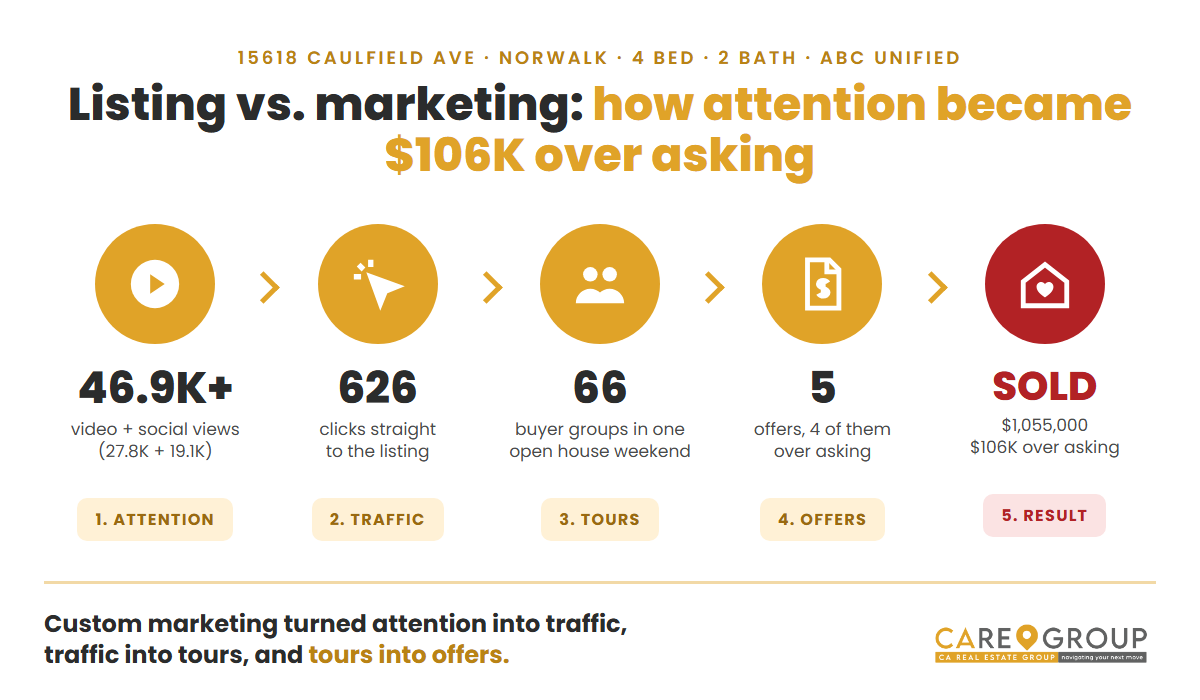
15618 Caulfield Ave sold over asking because we built the demand on purpose instead of waiting for it to show up. We staged it, photographed it like a magazine cover, and priced it to start a conversation. Then we gave it a week of coming-soon buzz and a video and social campaign that reached roughly 17 times more people than its Zillow listing did. The result was about 66 buyer groups in one weekend, 5 offers, and a winner that waived both the appraisal and loan contingencies.
How 15618 Caulfield Ave Sold Over Asking: The Results
Before the story, the scoreboard. Keep an eye on the Zillow row; we’ll come back to it.
What we measured
15618 Caulfield Ave
List price
$949,000
Sale price
$1,055,000 ($106,000 over asking, about 11%)
Days on market to accepted offer
12 (live Aug 13, under contract Aug 25)
Closed
September 22, 2026
Zillow views / saves (the default exposure)
1,639 views, 101 saves
Custom property video
27,800+ views, 22,400+ individual viewers, 3+ days of total watch time
Social carousel
19,100+ views, 626 clicks straight to the listing
Open house turnout
About 66 buyer groups in one weekend
Offers
5 offers, 4 of them over asking
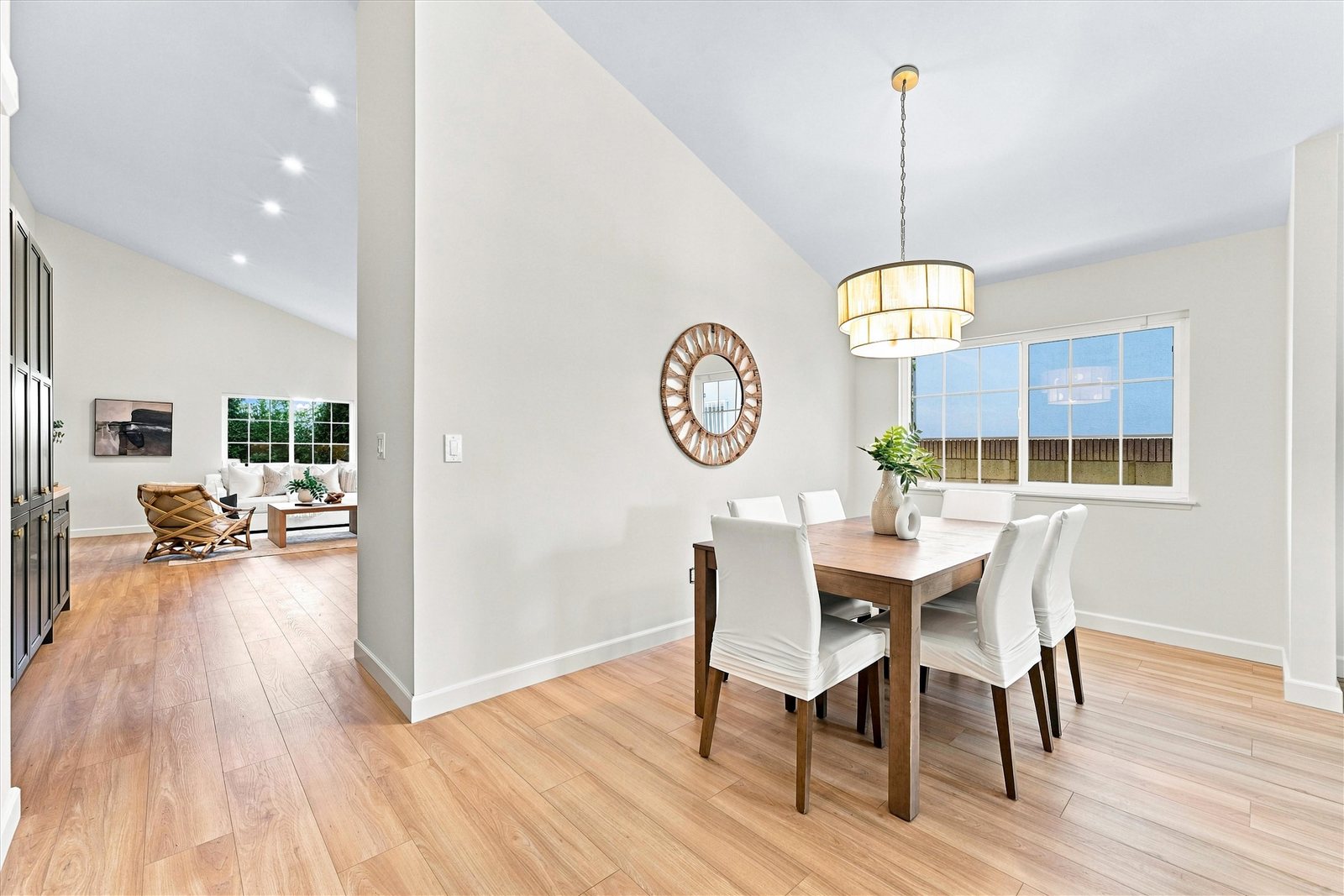
And the house at the center of it all: a completely remodeled single-story with 4 bedrooms, 2 bathrooms and about 1,798 square feet. Picture sage-green cabinets wrapping an open kitchen with a big quartz island, a full wall of pantry storage, and a dedicated coffee bar. Then add the detail that made families lean in: a spot inside the ABC Unified School District. The full photo tour lives on the 15618 Caulfield Ave Just Sold page.
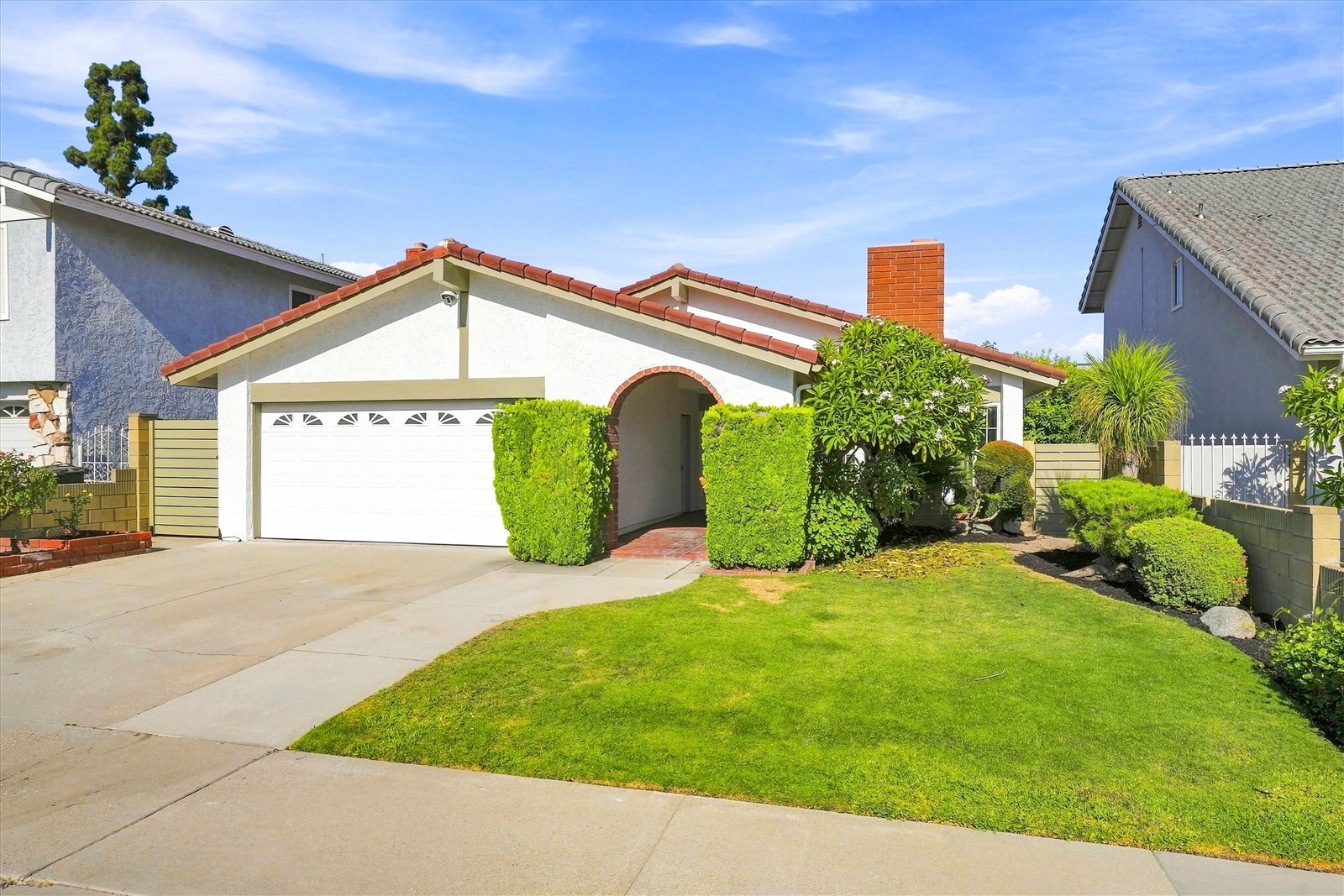
15618 Caulfield Ave, Norwalk: remodeled, single-story, and inside ABC Unified.
Chapter 1: Setting the Stage (Literally)
Here’s a truth we repeat to every seller: your buyer falls in love on their phone before they ever touch your doorknob. So before a single listing went live, the home was staged and professionally photographed. That meant fresh styling, perfect light, and every room looking like the best version of itself. As Christine puts it, photos decide the price. (Getting your own home ready? Our guides to preparing your home to sell for top dollar and preparing a Cerritos home before you list are the same playbook.)
Staged and professionally photographed, so buyers fell for it online first.
Then came the number. It’s the part that makes most sellers nervous, and the part that decides whether a home gets sold over asking or sits there collecting “maybe later” clicks. We listed at $949,000, a price designed to fill the room rather than “test the ceiling.” Christine is a certified Pricing Strategy Advisor, and this is exactly the move she breaks down in why pricing your Cerritos home correctly matters more than ever and in 3 ways to price your home, and only one creates a bidding war. Price to invite a crowd and you get a competition. Price to scare the crowd off and you get to know the words “price reduction” a little too well.
Chapter 2: “Think This Is Cerritos? It’s Actually Norwalk.”
The listing agreement was signed August 10. The home wouldn’t go live until August 13. We weren’t going to spend that week quietly waiting.
For about a week before launch, Caulfield ran as a coming-soon listing with its own landing page and a priority list for early photos and showing times. It also had a hook that local buyers couldn’t scroll past: “Think this is Cerritos? It’s actually Norwalk.” The home sits just outside Cerritos with the same look and feel, and it’s in ABC Unified: Whitmann Elementary, Ross Middle and Gahr High (buyers should always verify school assignments for themselves). For a lot of families, that’s the whole reason they move to this area for ABC Unified in the first place.
By the time the listing hit the MLS, people weren’t discovering Caulfield. They’d been waiting for it. That’s the magic of a well-run coming-soon strategy: the demand shows up before the “For Sale” sign does.
Chapter 3: Zillow Brought 1,639 People. We Brought 27,800.
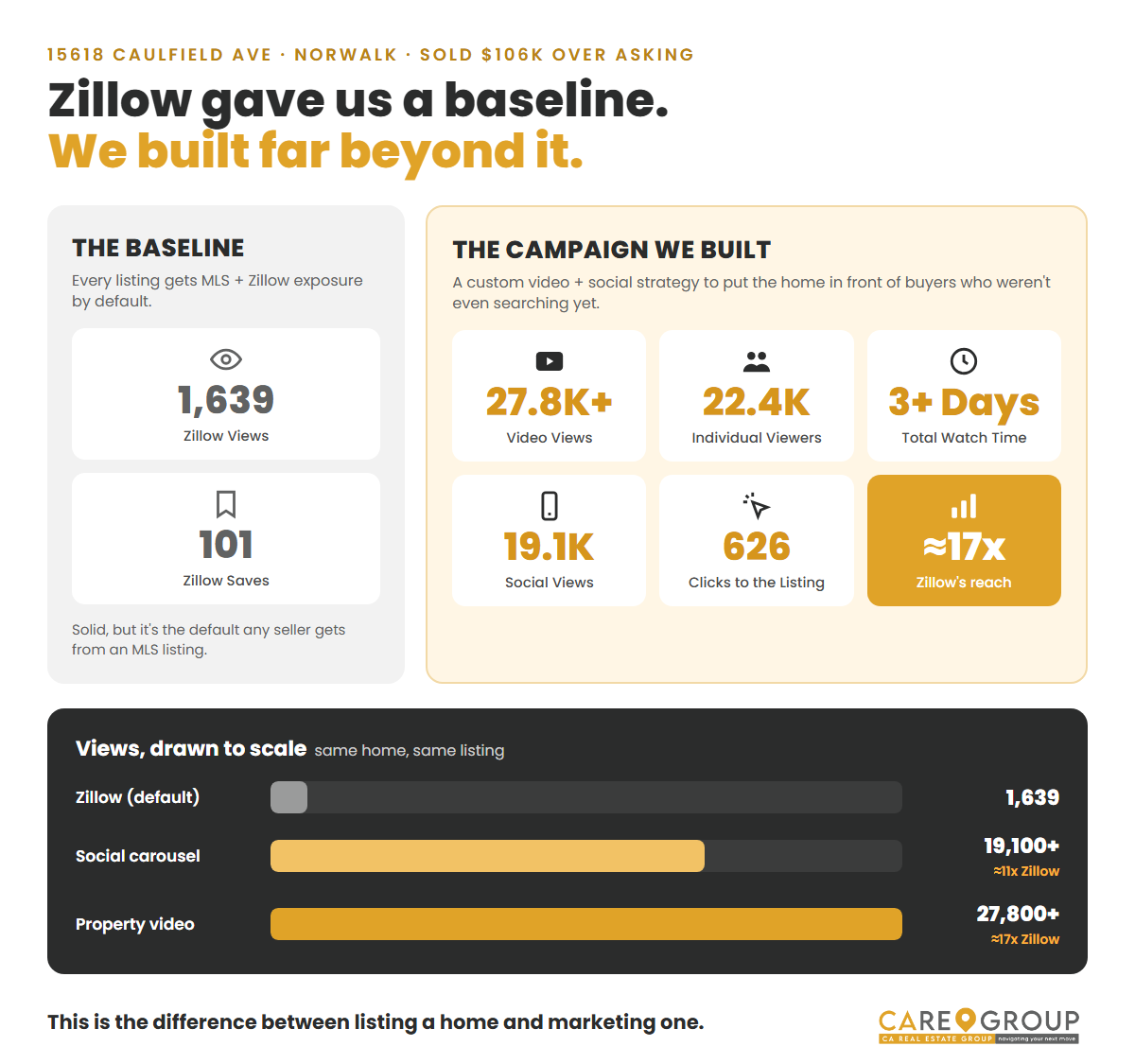
Let’s talk about that Zillow row. Every listing goes on the MLS and gets syndicated to Zillow. That’s the default. It happens whether you hire the best agent in town or no agent at all. For Caulfield, the default delivered 1,639 Zillow views and 101 saves. That’s respectable, but it’s the starting line, not the race.
So we built the race on top of it:
A custom property video that pulled in 27,800+ views from 22,400+ individual viewers, adding up to more than three full days of people watching this one house. That’s roughly 17 times Zillow’s reach, from the video alone.
A social carousel with 19,100+ views and 626 clicks straight to the listing, about 11 times Zillow’s reach.
The property video itself: drone views, a walkthrough of every room, and the neighborhood from above.
We don’t do “prop the door open and hope.” Before the weekend, we walked the neighborhood and handed out flyers inviting the neighbors. Neighbors talk, and they almost always know someone who’s been dying to buy on their street. Then we hired a professional barista to run a complimentary espresso bar inside the home.
Picture it: fresh espresso, a staged kitchen that looked like the photos (because it was), and a steady stream of people who’d been watching this house online all week. Over one weekend, August 15 and 16, about 66 buyer groups came through the door.
Open house weekend: about 66 buyer groups in two days.
A crowd like that changes the mood in every room. Nobody is wondering whether the price is right. They’re wondering how fast they can get an offer written. That’s the urgency that gets a home sold over asking, and it’s why bidding wars start with alignment, not luck.
Chapter 5: Five Offers, One Clear Winner
Then the offers landed: five of them, and four were over asking. All five were financed, so the question wasn’t just “who’s paying the most?” It was “who’s paying the most and actually getting to the finish line?”
In this case, the highest offer was also the strongest one. The winning buyer came in with:
No appraisal contingency
No loan contingency
A 5-day inspection contingency
That fine print is what makes a big number hold. When a financed buyer agrees to pay $106,000 over asking, the obvious risk is an appraisal that comes in short. With that contingency waived, a low appraisal couldn’t unravel the deal or reopen negotiations, and the quick inspection window meant any surprises would surface fast. A home sold over asking only counts if it closes at that price, which is why Christine always reads price and terms together. (Weighing offers of your own? Start with how to choose the best offer when selling your home and what “price and terms” actually means.)
It doesn’t always shake out this way. Sometimes the cleaner, lower offer is the smarter pick, like in this Buena Park sale where the highest offer didn’t win. On Caulfield, the best offer and the biggest offer happened to be the same one.
Chapter 6: The Quiet Part That Matters Most
Accepting an offer feels like the finish line. It’s really the start of the hardest stretch. From the signed contract on August 25 to closing day on September 22, we stayed involved, communicated constantly, and kept every deadline on track, because a home sold over asking on paper still has to make it to the closing table. It did, at $1,055,000. If escrow still feels like a mystery, our plain-English guides to what escrow is, why the close of escrow date is negotiable and earnest money deposits clear it right up.
Closed September 22, 2026, at $1,055,000.
So, What Does Caulfield Mean for Your Home?
If you own a home in Norwalk, Cerritos, or anywhere in the ABC Unified area, a sale like this just moved the comparables on your street. It also proves something we see every single season: the market doesn’t hand anyone an extra $106,000. Preparation does. So do smart pricing, marketing that goes way past the Zillow default, and careful negotiation. That’s how a home gets sold over asking and actually closes there.
Curious what that could look like for you? Here’s where to start:
Learn the playbook before you list: take Christine’s free SURE SELLER Course. It covers pricing, preparation, offers, negotiation, and the mistakes that cost sellers the most.
Buying instead of selling? Watching a home like Caulfield slip away is exactly why buyers need a head start. Grab the free Smart Buyer Bootcamp and our guide to buying a home in Cerritos, so you’re the one holding the keys next time.
Frequently Asked Questions
How much over asking did 15618 Caulfield Ave sell for?
It listed at $949,000 and sold for $1,055,000, which is $106,000 over asking, or about 11% above list price. It went under contract 12 days after hitting the MLS and closed on September 22, 2026.
How did 15618 Caulfield Ave get sold over asking?
Through a deliberate process: staging and professional photography, a price set to create competition, about a week of coming-soon marketing before the MLS, a custom video and social ad campaign that reached roughly 17 times more people than Zillow, and an open house weekend that drew about 66 buyer groups. That demand produced 5 offers, 4 over asking.
Isn’t the MLS and Zillow enough to sell a home?
The MLS and Zillow are the default exposure every listing gets. For this home, Zillow delivered 1,639 views and 101 saves. The custom video alone reached more than 27,800 views, and the social carousel drove 626 clicks straight to the listing. The extra reach is what turns a single offer into several, and it’s a big part of why this home sold over asking.
What happens with the appraisal when a home sells well over asking?
If the appraisal comes in below the contract price, a buyer with an appraisal contingency can renegotiate or walk away. On Caulfield, the winning buyer waived both the appraisal and loan contingencies and had a 5-day inspection contingency, which protected the $1,055,000 price through closing.
Is Caulfield Ave in the ABC Unified School District?
Yes. 15618 Caulfield Ave is in Norwalk and is served by ABC Unified School District. School assignments should always be independently verified with ABC Unified before you buy.