Got tough pet stains on your sofa or maybe you found a cute secondhand couch? Here’s how to get that upholstery looking and smelling good as new.
Did you just score a beautiful vintage sofa at a secondhand shop, and you want to know how to clean it or has your once-new sofa seen better days? Over time, crumbs, spilled soda, pet hair, dirt and oil from hands and feet build up on upholstered furniture and make it look dingy. Here’s how to clean furniture made of a variety of fabrics and materials.
1. Vacuum the Couch
Use a hand vacuum or the brush attachment on your vacuum to clean debris and dirt from the sofa surface. Be sure to clean the crevices where pet hair, food crumbs and dirt accumulate. If the cushions are not attached, remove them and vacuum both sides.
2. Clean the Wood or Metal Areas
Wipe down the sofa feet and other non-fabric parts of the sofa with a solution of warm water and liquid dish soap. If necessary, work your way up to heavier-duty cleansers, such as some of these DIY wood cleaning and polish options. Always wipe down with a microfiber cloth to prevent soap residue from remaining on the surface.
3. Determine the Type of Fabric
Find the tag on the couch and read the instructions for how to clean that type of upholstery.
Here are the codes found on the labels:
WS: Use a mild detergent with a steam vacuum or a dry-cleaning detergent.
S: Use a dry cleaner detergent only.
X: Use a vacuum only. No water.
W: You can use water to clean it.
4. How to Remove Odors
Before you tackle odors, determine what type of fabric your furniture is made of. It may be too delicate for liquid solutions.
In terms of tackling odors in your home, baking soda is a fantastic odor neutralizer (as most of us already know from using it in our refrigerators and freezers). Sprinkle baking soda on the couch cushions (make sure to check labels and test in a small area first). You may want to use a soft bristle brush to get the baking soda worked into the fabric. Let it sit for a few minutes, then vacuum it up.
Vinegar is also an amazing natural cleaning option for serious odors. Try using vinegar diluted with a bit of water in a spray bottle and spray on the upholstery. When the vinegar dries, its smell will dissipate. If the baking soda or vinegar didn’t work on their own, try them in combination for an extra powerful, odor-eliminating punch.
If it’s pet smells you’re trying to eliminate, try an enzymatic neutralizer such as Nature’s Miracle to spot-treat an area and eliminate the odor.
5. Use a Bug Spray on Secondhand Upholstery
Even if you know that pre-loved sofa came from a clean home, it’s best to be cautious and treat it with some pest control. Many commercial sprays are non-toxic and safe for kids and pets. Another option is to sprinkle the upholstery with diatomaceous earth and let it sit for several hours then vacuum it up.
6. How to Clean Fresh Spills
Start by blotting liquid spills. Use an absorbent cloth to first blot at spills and moisture to quickly absorb it. This will help reduce the chance that the stain will get “rubbed in,” and it’ll help to collect liquid that’s soaking into foam layers beneath the upholstery. The more liquid you can absorb by blotting, the less internal damage that happens to your furnishings.
7. Remove Stains With a Steam Cleaner
You might expect that you’ll just have to live with dirty armrests or dried spills for the duration of a seat’s existence, but steam cleaning is relatively effective at lifting embedded dirt from fabric. You’ll probably find that a steam cleaner for carpets and upholstery is an acceptable tool for this task — especially if it comes with a detail cleaning attachment. Always use a low-heat setting, and test in an inconspicuous spot to make sure that the fabric doesn’t have an unexpectedly negative reaction to the heat. Do not use steam heat on upholstery that is made of, or contains silk.
8. Try a DIY Cleaner
If you don’t have a steam cleaner to remove stains, create mild-solution cleaners from natural ingredients you probably already have in the kitchen. Homemade cleaners are cheaper and kinder to the earth.
Here’s how to clean a sofa, by fabric type:
For fabric upholstery: Mix 1/4 cup vinegar, 3/4 warm water and 1 tablespoon of dish soap or Castile soap. Put in a spray bottle. Mist the soiled area. Scrub with a soft cloth until the stain lifts. Use a second cloth moistened with clean water to remove the soap. Dry with a towel.
For leather upholstery. Mix 1/2 cup olive oil with 1/4 cup vinegar and put into a spray bottle. Spray the cleaner on the surface of the couch and buff with a soft cloth.
For synthetic upholstery: Mix 1/2 cup of vinegar, 1 cup of warm water and 1/2 tablespoon of liquid dish soap or Castile soap in a spray bottle. Mist the soiled area and scrub with a soft cloth until the stain is gone.
9. Let the Couch Dry
Use a towel to soak up any excess water remaining on the sofa surface. Let the sofa air dry. If it’s humid, you may want to set up a box fan pointed at the sofa for speed drying. Water can cause cushions and fabric to mildew.
More Couch Cleaning Tips
Lint Roller If your couch is made from a fabric that easily attracts lint, hair or dust, you should keep a lint roller on hand that you can exclusively use for your couch. This works best for a couch that only requires a light amount of de-linting, but it can work for larger jobs, too. In a pinch, you can use large pieces of packing tape to de-puppify the couch.
Leather Soap and Conditioner If you have a leather couch, leather soap and conditioner are something you can use to keep it looking clean and fresh. You also can use a slightly damp, clean rag to wipe off my leather furniture about once a week.
Steam If your couch is made of a fabric that can be cleaned with a water-based cleaner, try using steam to loosen up dirt and stains. Try this: Grab your iron, put it on the “steam” setting, and wave it back and forth across any trouble spots on your couch.
How to clean a microfiber couch
If your couch is made of a fabric that can be cleaned with a water-based cleaner, try using steam to loosen up dirt and stains. Try this: Grab your iron, put it on the “steam” setting, and wave it back and forth across any trouble spots on your couch.
Price and stock could change after publish date, and HGTV may make money off these affiliate links. Learn more.
The housing market is going through a transition. Higher mortgage rates are causing more moderate buyer activity at the same time the supply of homes for sale is growing.
And if you aren’t working with an agent, you may not realize that. Here’s the downside. If you’re not informed, you can’t adjust your strategy or expectations to today’s market. And that can lead to a number of costly mistakes.
Here’s a look at some of the most common ones – and how an agent will help you avoid them when you sell.
1. Overpricing Your House
Many sellers set their asking price too high and that’s why there’s an uptick in homes with price reductions today. An unrealistic price will deter potential buyers, cause an appraisal issue, or lead to your house sitting on the market longer. An article from the National Association of Realtors (NAR)explains:
“Some sellers are pricing their homes higher than ever just because they can, but this may drive away serious buyers and result in unapproved appraisals . . .”
To avoid falling into this trap, partner with a pro. An agent uses recent sales of similar homes, the condition of your house, local market trends, and so much more to find the price that’ll attract more buyers and open the door for multiple offers and a faster sale.
2. Skipping the Small Stuff
You may try to skip important repairs, thinking you can pass the task on to your buyer. But visible issues (even if they’re small) can turn off potential buyers and result in lower offers or demands for concessions. As Money Talks News says:
“Home shoppers like to turn on lights, flush toilets and run the water. If these basic things don’t work, they may assume you’ve skipped other maintenance. Homes that appear neglected aren’t likely to fetch top price.”
If you want to get your house ready to sell, the best place to turn to for advice is your agent. They’ll be able to do a walk-through with you and point out anything you’ll need to tackle before the photographer comes in.
3. Not Looking at Things Objectively
Buyers today are feeling the pinch of high home prices and mortgage rates. With affordability that tight, they may come in with an offer that’s lower than you’d want to see – especially if you didn’t stage, price, or market the house well.
It’s important you don’t take this personally. Getting overly emotional can put the sale at risk. As an article from Ramsey Solutions says:
“Remember, a buyer’s offer is not a reflection of their opinion of your home or your housekeeping abilities. . . The sale of your home is strictly a business transaction. If they start out with a low offer, don’t take it personally and get emotional. Instead, channel that energy toward negotiating. Work with your agent and make a counteroffer.”
4. Being Unwilling To Negotiate
The supply of homes for sale has grown. That means buyers have more options, and with that comes more negotiation power. As a seller, you may see more buyers getting an inspection, requesting repairs, or asking for help with closing costs today. You need to be prepared to have those conversations. As U.S. NewsReal Estate explains:
“If you’ve received an offer for your house that isn’t quite what you’d hoped it would be, expect to negotiate . . . the only way to come to a successful deal is to make sure the buyer also feels like he or she benefits . . . consider offering to cover some of the buyer’s closing costs or agree to a credit for a minor repair the inspector found.”
An agent will walk you through what levers you may want to pull based on your own goals, budget, and timeframe.
5. Not Using a Real Estate Agent
Notice anything? For each of these mistakes, partnering with an agent helps prevent them from happening in the first place. That makes trying to sell your house without an agent’s help the biggest mistake of all.
Real estate agents have experience and expertise in pricing, marketing, negotiating, and more. That knowledge streamlines the selling process and usually results in drumming up more interest and ultimately can get you a higher final price.
Bottom Line
If you want to avoid making mistakes like these, you need to work with a CA Real Estate Group agent.
If you’re in the market to buy a home, there’s some exciting news for you. Many people assume that newly built homes are more expensive than existing ones (houses that have already been lived in), but that’s not always the case. In fact, exploring newly built homes can sometimes lead to more cost-effective options, especially today. Hard to believe, right? But the data doesn’t lie.
Here are two key reasons working with your agent to look into new home construction could help you find a more budget-friendly option.
Reason 1: Lower Median Prices for Newly Built Homes
The median sales price for newly built homes is lower than the median sales price for existing homes today. This might seem surprising, but it’s true according to the latest data from the Censusand the National Association of Realtors (NAR):
Why is that? Builders are focused on building what they can sell. And right now, there’s a very real need for smaller and more affordable homes – so that’s what they’ve been bringing to the market. At the same time, there are also more newly built homes already on the market than there have been over the past few years, so builders are motivated to make sure they’re selling what they’ve got available before adding more.
Reason 2: Attractive Incentives from Home Builders
Another big reason to consider a newly built home is the range of incentives that many home builders are offering. Again, since builders are aiming to sell their current inventory, some are providing special deals to sweeten the pot for homebuyers. HousingWire explains today’s trend:
“Overall, the usage of sales incentives was up to 61% in June, compared to 59% in May.”
One of the most appealing incentives right now is how builders are able to offer competitive mortgage rates. They may also provide other incentives, such as covering closing costs, or offering free upgrades.
Why This Matters to You
Considering a newly built home could open up opportunities you hadn’t thought of before. With competitive pricing and attractive incentives, you might just find that a brand-new home is the most appealing option for you.
Bottom Line
Buying a home is a big decision, and it’s essential to consider all your options. By looking into newly built homes, you might find a perfect fit for your needs and your budget.
Let’s explore the possibilities together. If you have any questions or want to see what’s available, reach out to a CA Real Estate Group real estate expert.
————————————————-
CA Real Estate Group | Caliber RE Group
————————————————-
Owning a home is a wonderful thing – and a huge responsibility! At any given moment there are probably at least a dozen little things that need to get fixed around the house. From the toilet that won’t stop running to a hole in the wall, and everything in between. Sometimes making ends meet while paying off the mortgage is hard enough, let alone paying a professional to come in a work on these projects. The good news is, a lot of minor home repairs are easy to do yourself! So grab a friend and get to repairing your home this weekend with this easy list of tips and tricks from the pros!
10. Repair A Hole In The Wall
We’ve all probably gotten a hole in a wall, one way or another. Whether you decided to “toss” a textbook onto the bed only to miss and have it crash into the wall, or your husband got a great idea to move a massive bookshelf to the other room without any help and it inevitably ended up crashing into the wall, or… any other way people get holes in walls, the fact is that the hole is there, and it’s ugly. In this easy to follow tutorial from The DIY Playbook, we learn how simple it is to repair a hole in the wall. You’ll just need a few basic supplies: mesh tape, razor blade, spackle, paint and primer, and a sanding block. The process is pretty simple – a couple layers of mesh tape, followed by spackle and sanding the area down. Then, paint away, and you’re good to go!
9.Fix Chipped Concrete Steps
If you have concrete steps in your front or backyard, you’ll know the ongoing battle of keeping them up! Once that first crack shows, it only gets worse year after year as the water freezes and expands during the winter months, then melts and contracts during the spring and summer. It can be hard to get control of! Plus, usually, things like back porch steps are pretty low on the priority list when it comes to home repairs, but don’t put this one off any longer! Repairing concrete stairs is actually a lot easier and cheaper than you might think. In this step-by-step tutorial from Two Feet First, we see how to repair concrete with some cement, water, a putty knife, and a wire brush.
8. Restore Hardwood Floors In 5 Minutes
One of my first apartments had beautiful hardwood floors that I loved. What I didn’t love? When my roommate brought home a 65-pound dog full of energy and rebellion. After a year of playing run-around-the-apartment-and-scratch-up-the-floors, as well as normal wear and tear (it wasn’t all the dog’s fault, after all), I was sure we would never get the deposit back on the apartment. I tried several different methods of cleaning up the floors and eventually gave up. I wish I would have known about this little trick way back then! According to The Chronicles of Home, all you need is a can of Restor-a-Finish and a roll of paper towels. Simply pour some of the finish on the scratches, then rub it into the scratches with a paper towel. Then use a dry paper towel to pass over the area several times. It won’t make deep scratches disappear, but it will significantly reduce the eyesore of scratched floors! Plus, it really does work wonders on small scratches. See for yourself!
7. Fix A Stuck/Uneven Door
We all have that one door that gets stuck all the time. And if you don’t have an uneven door now, chances are you will at some point, so this is good info for everyone to know. The first place to look for trouble is the screws on the hinges. If the screws are tight, do a visual inspection when the door is closed. If you can see the gap go from wide to narrow, it’s probably due to a hinge that has worn down over time. See how to fix this quite easily with this tutorial from homespothq.com!
6. Caulk Like A Pro
Have you ever taken on a caulking project? Whether it was for a backsplash in the kitchen, redoing the tile in the bathroom, or installing new windows, caulk is definitely one thing the home repair DIYer always has on hand. However, sometimes the caulking ends up looking sloppy, especially if you’re just starting out and haven’t used this product before. A quick and super easy tip from How To Nest For Less tells us to use painter’s tape when caulking. How genius is that?! I can’t believe I’ve never thought of that before, but next time I’ll know!
5. Repair Garage Door Dents
Aluminum and steel garage doors have their pros and cons. On one hand, they are relatively maintenance-free, but on the other hand, they can dent easily. Lucky for us, this easy tutorial from hunker.com shows us one easy trick the pros use on dented cars that works just as well on garage doors! First things first – clean the dented area with soap and water and allow to dry for at least an hour. Then, cut a piece of aluminum foil that is big enough to cover the dent. Set the foil over the dent and hold with your hand. Move a lighter back and forth over the dent for a minute, and then take a compressed air canister and flip it upside down and spray the area for 30 seconds. The temperature difference between the lighter and frozen compressed air will force the dent to “pop” out!
4. Fix A Chipped Sink
Chipped enamel on sinks or tubs can be unsightly and so frustrating to deal with. You don’t have to replace the whole thing just because of a few chips – with this helpful tutorial from Family Handyman, see how you can fix it yourself for less than $20! You’ll need an Epoxy repair kit, which can be found in the adhesive section of most hardware stores. There are several color options available and you can mix colors to get the perfect match, if necessary. You’ll also need a small brush and some wet/dry sandpaper, 400 or 600 grit. Start out by scrubbing the area with a sponge and soapy water, and rub the sandpaper over the damaged area to remove dirt. Then, just mix the epoxy according to directions and use a brush to fill in the gap. You’ll need to work in layers, and be respectful of the dry time according to the package.
3. Repair A Sagging Fence
Does this look familiar? I grew up on a farm where some part of the wooden fence was in desrepair. It really feels like a huge undertaking to fix a fence – either that or pay way too much to have someone else come and do it for you. But, as you’ll learn in this awesome tutorial from ehow.com, it’s usually a lot easier than it looks! Instead of going through and replacing each plank of wood, you can usually save the structure of the fence simply by resetting some bolts and hinges, and a few strategically placed reinforcement planks.
2. Fix Torn Drywall Paper
If you’ve ever tried to remove the trim in your house and didn’t score the trim enough (or at all), you’ll find that the paint pulls the paper right off of your drywall, and you’re left with an unfortunate looking wall. Your first instinct might be to just paint over the ripped paper, but wait! It’ll look terrible (trust me). Plus, there’s an easy way to fix the torn drywall paper. First, cut off the loose edges, even if that means cutting off a significant amount of the paper. Then, sand it all down. Prime the area and use a joint compound. Sand again. Repeat the joint compound and sanding steps as much as necessary to build the wall back up, and end with a coat of primer to seal it all in. See the full tutorial at mresdoitherself.com!
1. Popcorn Ceiling Makeover
Pretty much everyone knows the pain of the popcorn ceiling. It’s fine for an apartment or a temporary living situation, but it’s such a hassle to keep clean and after several years of wear and tear it start crumbling and leaving lots of dust around. Not to mention… it’s not very attractive! In this amazing DIY from edithandevelynvintage.com, see how this lady transforms her popcorn ceiling into a gorgeous planked ceiling for under $300! Plus, there’s no need to scrape off the old popcorn texture – win-win!
If you own a home, your net worth has probably gone up a lot over the past year. Home prices have been rising, which means you’re building equity much faster than you might think. Here’s how it works.
Equity is the current value of your home minus what you owe on the loan.
Over the past year, there have still been more people wanting to buy than there are homes available for sale, and that’s pushed prices up. That rise in prices has translated directly into increasing equity for homeowners.
How Much Equity Have You Earned over the Past 12 Months?
According to the latest Homeowner Equity Insights from CoreLogic, the average homeowner’s equity has grown by $28,000 in the last year alone.
That’s the national average, so if you want to see what’s happening in your state, check out the map below. It uses data from CoreLogic to show how much equity has grown in each state over the past year. You’ll notice every single state with sufficient data saw annual equity gains:
What If You Bought Your House Before the Pandemic?
If you bought your house before the pandemic, the equity news is even better. According to data from Realtor.com, home prices shot up by 37.5% from May 2019 to May 2024, meaning your home’s value has likely increased significantly. Ralph McLaughlin, Senior Economist at Realtor.com, says:
“Homeowners have seen extraordinary gains in home equity over the past five years.”
To give context to how much equity can stack up over time, Selma Hepp, Chief Economist at CoreLogic, explains the total equity the typical homeowner has today:
“With home prices continuing to reach new highs, owners are also seeing their equity approach the historic peaks of 2023, close to a total of $305,000 per owner.”
How Your Rising Home Equity Can Help You
With how prices skyrocketed a few years ago, and the ongoing price growth today, homeowners clearly have substantial equity built up – and that has some serious benefits.
You could use it to start a business, fund an education, or even to help you afford your next home. When you sell, the equity you’ve built up comes back to you, and may be enough to cover a big part – or even all – of your next home’s down payment.
Bottom Line
If you’re planning to move, the equity you’ve gained can really help. Curious about how much you have and how you can use it to help pay for your next home? Connect with CA Real Estate Group.
OPEN HOUSE THIS WEEK (Jul 11-14)
🏡 15303 Jersey Ave, Norwalk, CA 90650
🏡 3 bd | 2 ba | 1,434 sq ft | 5,002 sq ft lot
———–
OPEN HOUSE SCHEDULE:
🚩 THU, JUL 11, 3:00-6:00 PM
🚩 FRI, JUL 12, 3:00-6:00 PM
🚩 SAT, JUL 13, 1:00-4:00 PM
🚩 SUN, JUL 14, 1:00-4:00 PM
———–
🌴 Spacious living room with laminate flooring opens to the dining room with a built-in cabinet.
🌴 The kitchen has new linoleum, maple cabinets, a Kitchen Aid oven and microwave combo, and a 4-burner cooktop.
🌴 Plenty of cabinet and counter space with a breakfast nook and laundry just off the kitchen area.
🌴 To service the three bedrooms is the hall bath with tile flooring and a tub/shower combo, sink with a solid Corian-like counter. The other bath also has a shower.
🌴 Double-pane windows, fresh paint both inside and out, and new carpet in all bedrooms.
🌴 The addition family room houses a fireplace, built-in bookshelves, and ¾ bathroom.
🌴 Possible workshop space in the 2- car garage with a newer garage door.
🌴 Amply shaded backyard is mostly brick for ease of care.
———–
Stop by during our Open House or call and make an appointment for a private showing! Take a virtual tour & more see more photos of this gorgeous property here: https://carealestategroup.com/search/listing/15303-jersey-ave-norwalk-ca–PW24130139/
———–
👩🏻 Christine Almarines @christine_almarines
Buyers Agent Realtor DRE # 01412944
714-476-4637 | christine@carealestategroup.com
CA Real Estate Group | Caliber RE Group
———–
(Listed By Edie Israel and Keller Williams Realty)
You want to know the best toddler beaches with no waves in OC? I’m going to provide you with my Top 4 plus two bonus beaches, but they come with a note of precaution.
Still water beaches, meaning no waves or surf, have a general propensity for water quality issues and they can also be good stingray habitat – at least along the warm sandy edges.
Check Heal the Bay Beach Report Card for water quality. Make sure a lifeguard is watching and ask for his/her advice about local conditions on the day you visit.
Any body of water is a dangerous place for a toddler – you should be within arm’s length of any child under 4 years old when they are wading or swimming – and this especially applies at the beach!
As long as you move forward with those precautions in mind, then you should have a grand time at these toddler beaches!
Corona Del Mar — inside the harbor (Pirate’s Cove)
Scramble down the path that leads over the rocks and take the stairs to this mini beach (NOT stroller-friendly). Check the tides before you go!
You’ll have to find parking on the street above the beach or pay for parking in the adjacent lot. Read my post about Corona Del Mar Beach.
It’s also a fun place to watch boats enter and leave Newport Harbor in the summer. The Wedge is just across the harbor and from the bluff you can see the surf pound the breakwater.
Baby Beach in Dana Point
You can park close and you don’t have to pay for parking, but this one can get incredibly busy on weekends and holidays. So arrive early!
It’s a launch point for paddleboards and kayaks, as well. Swimmers are roped off from boat traffic by a buoy line so you’ll have some room for shallow water swimming. Read my post about Baby Beach in Dana Point Harbor.
Weekday trips in the off-season are probably the least crowded. August and September can still be very warm in California.
Also, be aware that it can be 90 degrees at your house inland and foggy at the beach. Make sure you come prepared!
Some families prefer the grassy area behind the beach for relatively sand-free picnics.
Newport Dunes in Newport Beach
Parking inside Newport Dunes will cost you, but there is a wide bay for swimming and you can pay extra for access to a waterpark with float toys in the summer for playing in the water.
North Star Beach in Newport Beach’s Back Bay is in the same general geographic area as Newport Dunes (above), except the opposite side of the bay and a little further inland. So much of the area is protected as a nature preserve.
This City of Newport Beach spot is designed for launching recreational watercraft like kayaks, outriggers, canoes, and paddleboards. The beach area is VERY small, but the water play is fun and airplanes fly over from Orange County Airport. This is NOT a swimming beach, but more of a wading spot for toddlers.
There are quite a few things to be aware of at North Star Beach and also a lot of links to share about it, so I ended up writing a full post on it.
I have had one parent complain of rocks that hurt her child’s foot, but otherwise no reported issues over the years this one has been included on the list. Could be seasonal since beaches tend to have the sand wash in and out over the year (summer = more sand, less rocks)?
Mother’s Beach in Huntington Harbour
A favorite for the Huntington Beach area is Mother’s Beach inside Huntington Harbour (thanks to reader, Meg, for pointing that one out)!
This one has an awesome pirate-themed playground and it’s somewhat off the beaten path (except on popular weekends and holidays when it can be really busy)!
So that’s it! If you can think of any other toddlerbeaches in OC with NO waves, please let me know! I do know of another in Huntington Harbour, but the parking is pretty impossible so I’ve not included it here.
If you want to know about the 30+ Toddler-Friendly Parks in Orange County, then make sure you go read that blog post which highlights playgrounds with baby swings and restrooms – and other features that make them work for younger kids!
Summer is officially here and that means it’s the perfect time to start planning where you want to vacation and unwind this season. If you’re excited about getting away and having some fun in the sun, it might make sense to consider if owning your own vacation home is right for you.
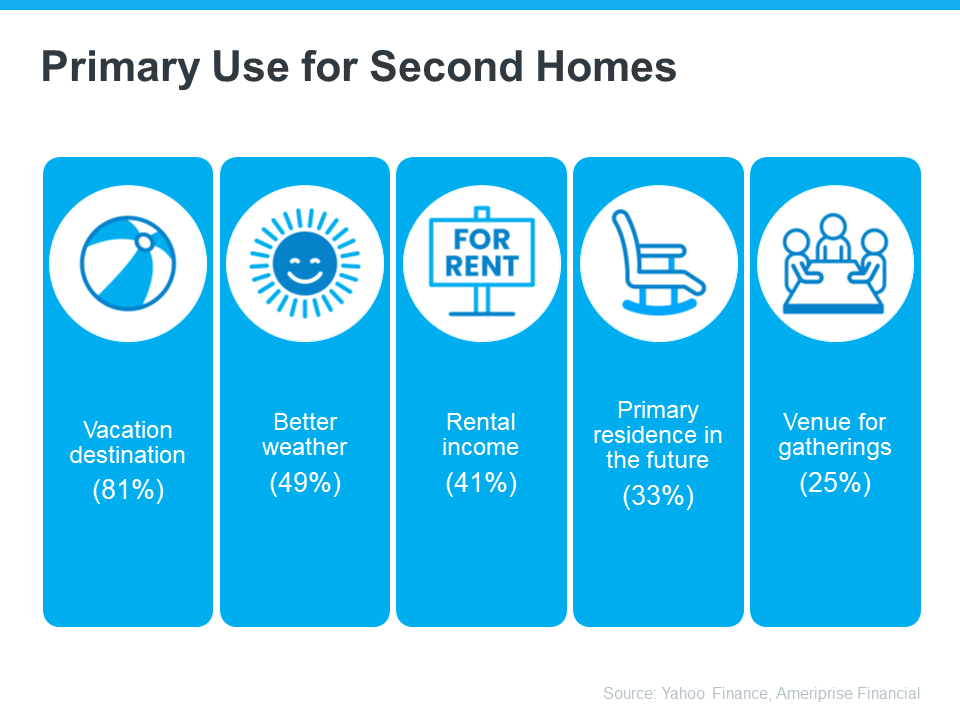
An Ameriprise Financial survey sheds light on why people buy a second, or vacation, home (see below):
Vacation destination or a place to get away from the stresses of everyday life (81%) – Having a second home to use as a vacation spot can be a special place where you go to relax and take a break from your daily routines and stressors. It also means you won’t have to worry about finding somewhere to stay when you go there.
Better weather (49%) – Buying in a place where there may be nicer weather can be a great escape, especially if it’s cold or rainy where you usually live. It lets you enjoy sunny days and warm temperatures, even when it’s not so nice back home.
Rental income (41%) – You can rent it out to other people when you’re not using it, which can help you make some extra money.
Primary residence in the future (33%) – You can eventually move into the home full-time during retirement. That means you can enjoy vacations there now and have a getaway ready for your future.
Having a venue for gatherings with family and friends (25%) – It would be a special spot where you can have parties, regular family trips, and create fun memories.
Ways To Buy Your Vacation Home
And you don’t have to be wealthy to buy a vacation home. Bankrate shares two tips for how to make this dream more achievable for anyone who’s interested:
Buy with loved ones or friends: If you’re okay with sharing the vacation home, you can go in on the purchase price together and pool your resources to make it more affordable.
Put a savings plan in place: This will require patience and persistence but consider adding a vacation home savings plan to your budget and contributing to it monthly.
Finding Your Dream Spot with a Little Help from an Agent
If the idea of basking in the sun at your very own vacation home sounds appealing, you might want to start looking now. Summer’s when everyone’s trying to buy their slice of paradise, so it’s best to start early.
Your first move is to team up with a real estate agent. They know all the ins and outs of the area you want to be in, and which homes you should look at. Plus, they can give you the lowdown on everything you need to know about having a second home and how it can benefit you. The same article from Bankrate says:
“Buying real estate in a new area — or even one you’ve vacationed in for many years — requires expert guidance. That makes it a good idea to work with an experienced local lender who specializes in loans for vacation homes and a local real estate professional. Local lenders and Realtors will understand the required rules and specifics for the area you are buying, and a local Realtor will know what properties are available.”
Bottom Line
If the idea of owning your own vacation home appeals to you, connect with CA Real Estate Group.
Don’t take all of this responsibility on. Instead, connect with a CA Real Estate Group agent so you have someone with the knowledge and experience you’ll need on your side.
Let’s connect and plan your next steps. Find out if we’re the right real estate team for you!
It should go without saying that your fridge and freezer are most vulnerable in the summer heat. To keep them running smoothly, clean condenser coils—which help the unit stay cool by releasing heat from the compressor—and be sure to remove dirt, pet hair, and any nasty food that’s lodged there.
Shortcuts: Make the job simple by using a vacuum and coil brush, says Chris Granger, vice president of Sears Home Services.
While you’re at it, tackle the door.
“A leaky door gasket can result in your refrigerator trying to cool the entire kitchen,” Granger says.
Clean the gasket with a mild cleaner, and then check the seal integrity with a solution of soapy water—just like you would do with an inflatable mattress, he says. You can also use the dollar bill approach: Close a dollar bill in the door so it’s half in your fridge. If your gasket isn’t tight enough, it won’t hold the bill firmly in place—the dollar bill will fall out or slide down.
Call in the pros: Most appliance repairmen charge by the hour. Depending on the issue, a refrigerator repair could cost anywhere from $100 and $250 an hour.
CA Real Estate Group works with professional service people.Whether it’s refrigerator repair or HVAC tune-ups, we can connect you with the people we work with.